

Simple, Clear & Backed by Expertise)
If you’re looking to understand Climate Impact on Agriculture and how it affects your farm’s future, this guide is designed to give you everything you need in one place. No complex jargon, no doom-and-gloom predictions without solutions — just real, human-centered clarity that helps you understand, adapt, and protect your farming operation from climate challenges. Whether you’re searching for ways to prepare for extreme weather, adjust your crop choices for changing conditions, or simply want to safeguard your livelihood against climate risks, this guide breaks things down step by step.

Climate Impact on Agriculture
Quick Summary
Here’s a fast overview for readers who want the essentials:
- ⭐ Main Topic: Climate Impact on Agriculture
- 🎯 Primary Purpose: Understand climate challenges and implement adaptation strategies for 2026 and beyond
- 🧠 Why It Matters: Climate-related crop losses increased 40% in the past decade — preparation is now essential for farm survival
- ⏳ Reading Time: 3 minutes
- 🧩 Who It Helps: All farmers, agricultural managers, ranchers, and food producers facing weather unpredictability
What Is Climate Impact on Agriculture?
Climate Impact on Agriculture refers to the measurable effects of changing weather patterns, temperature shifts, precipitation variability, and extreme weather events on farming productivity, crop viability, soil health, and livestock welfare.
This isn’t about distant future predictions — it’s about observable changes happening right now that directly affect planting dates, harvest yields, pest pressures, water availability, and farm profitability.
The reality of Climate Impact on Agriculture includes:
- Shifting growing seasons — frost dates arriving earlier or later than historical patterns
- Increased weather extremes — more frequent droughts, floods, heat waves, and unexpected freezes
- Changing pest and disease patterns — insects and pathogens expanding into previously unsuitable regions
- Water stress and availability issues — altered rainfall timing and snowpack reduction affecting irrigation
- Soil degradation acceleration — erosion and nutrient loss intensified by extreme precipitation
- Crop zone migration — traditional crops becoming unreliable while new varieties become viable
Related agricultural entities affected include:
- Crop hardiness zones (USDA zones shifting northward at 13 miles per decade)
- Integrated pest management (adapting to new pest populations and behavior)
- Water resource management (irrigation systems facing supply variability)
- Soil conservation practices (erosion control under extreme rainfall)
- Agricultural insurance (coverage for climate-related losses)
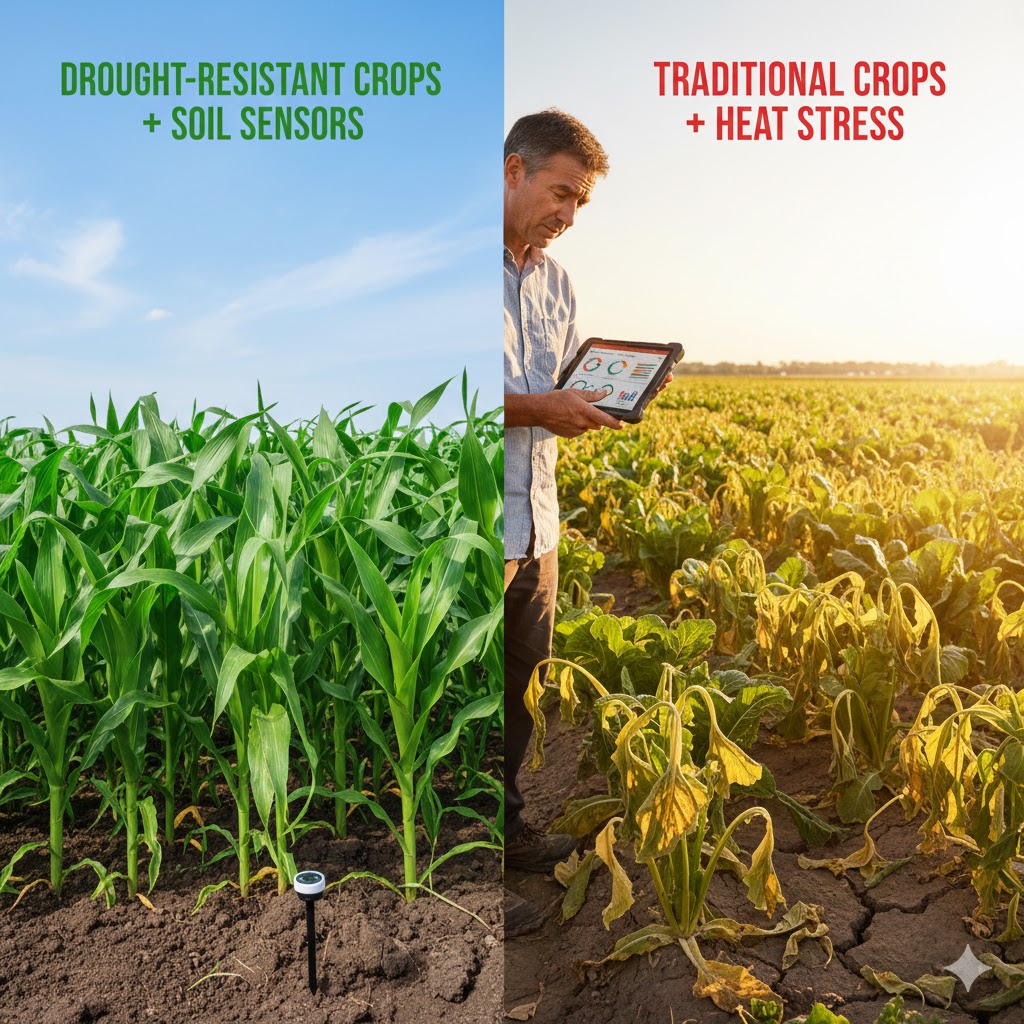
- Climate-resilient crop varieties (drought-tolerant, heat-resistant cultivars)
Why Climate Impact on Agriculture Is Important
Real Value and Critical Problems Solved
Understanding Climate Impact on Agriculture solves several urgent challenges farmers face today:
What problem it solves:
Farmers can no longer rely on historical weather patterns to make planting decisions. Without understanding current climate impacts, you’re essentially gambling with your entire season based on outdated information. This knowledge transforms reactive crisis management into proactive adaptation.
Why people search for it:
Agricultural producers are experiencing direct financial losses from weather unpredictability. When your grandfather’s planting calendar no longer works, when crops fail from unexpected heat stress, or when storms destroy infrastructure — you need concrete strategies, not just awareness.
The 2025 growing season saw record insurance claims in 23 states due to climate-related losses. Farmers are searching for answers because their survival depends on adaptation.
What happens if they ignore it:
Farms that fail to acknowledge and adapt to Climate Impact on Agriculture face:
- Escalating production losses from mis-timed planting based on outdated climate data
- Complete crop failures when traditional varieties can’t tolerate new temperature extremes
- Unsustainable water costs as irrigation needs increase while supply decreases
- Pest and disease devastation from populations they weren’t prepared to manage
- Declining land values as soil degradation accelerates
- Inability to secure crop insurance or face skyrocketing premiums
- Eventual bankruptcy when losses compound over multiple affected seasons
Benefits backed by experience and studies:
Farms that proactively address climate impacts report:
- 30-50% reduction in weather-related losses through strategic adaptation
- Improved soil resilience that buffers against extreme precipitation
- Diversified income through climate-appropriate crop additions
- Better access to climate-smart agriculture grants and programs
- Increased long-term farm viability and land value
A 2024 USDA study found farms implementing climate adaptation strategies maintained profitability even during extreme weather years, while unprepared farms in the same region saw 25-60% revenue declines.
Research from land-grant universities demonstrates that understanding Climate Impact on Agriculture and adjusting practices accordingly can extend farm viability by decades in regions facing significant climate shifts.
Step-by-Step Guide: How to Adapt to Climate Impact on Agriculture
Step 1: Assess Your Farm’s Climate Vulnerability
Before you can adapt, you need to understand your specific risks.
Review your local climate trends:
- Compare the last 5 years of temperature data against the previous 20-year average
- Document changes in first/last frost dates
- Track total annual precipitation and distribution patterns
- Note extreme weather events (number of 90°F+ days, drought weeks, flood incidents)
Identify your farm’s greatest vulnerabilities:
- Which crops are most sensitive to heat or water stress?
- Does your soil drain well enough to handle intense rainfall?
- Are your irrigation sources reliable during drought?
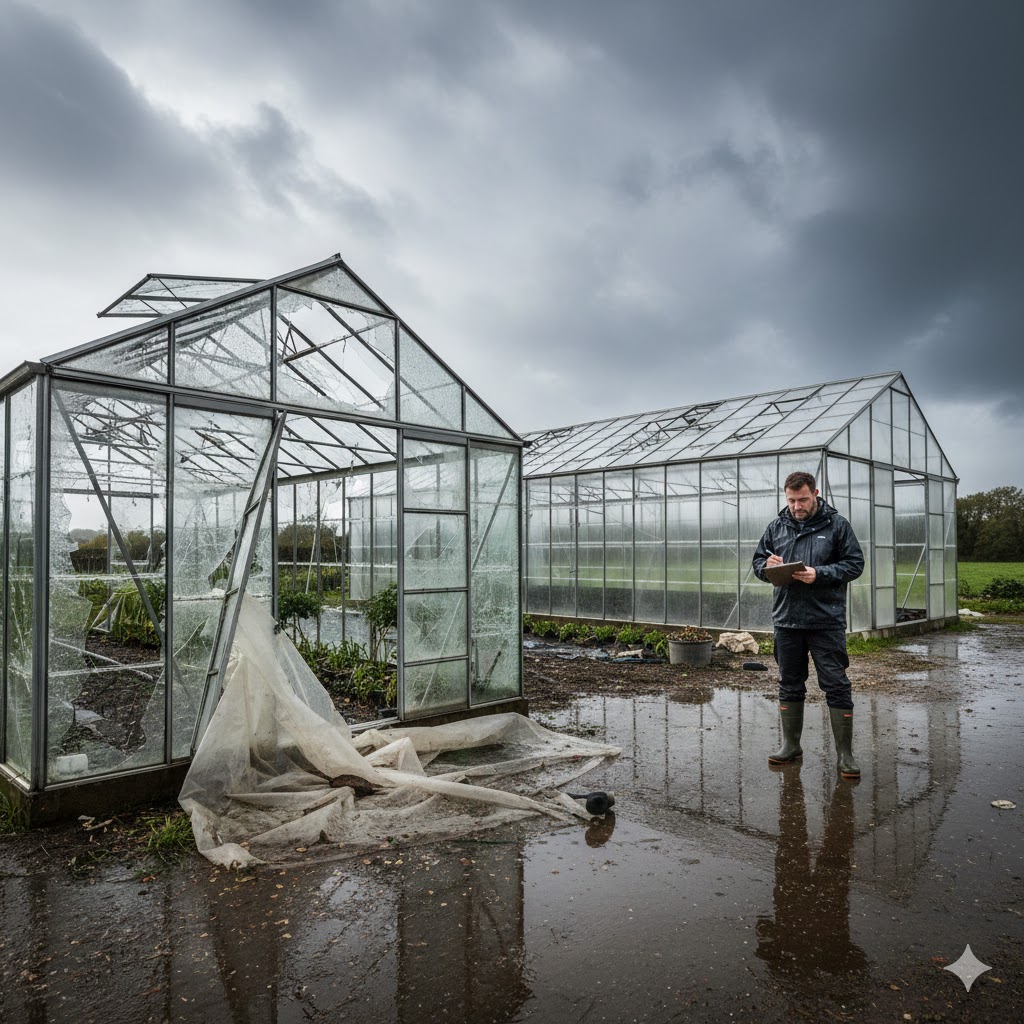
- Is your infrastructure (barns, greenhouses, fences) built to withstand stronger storms?
This honest assessment is the foundation of addressing Climate Impact on Agriculture on your specific operation.
Step 2: Update Your Crop Selection Strategy
Traditional crop choices may no longer be optimal for your changing climate.
Research climate-resilient alternatives:
- Identify drought-tolerant varieties of your current crops
- Explore crops from slightly warmer growing zones that may now thrive in your area
- Consider diversity — multiple varieties spread risk
- Test small plots of new options before full commitment
Adjust planting timing:
- Use current 10-year weather data, not 30-year historical averages
- Track degree days rather than calendar dates for planting decisions
- Build flexibility into your schedule to respond to late/early seasons
Strategic crop adaptation is one of the most powerful responses to Climate Impact on Agriculture.
Step 3: Improve Water Management Systems
Water will become less predictable — both too much and too little.
For drought resilience:
- Install drip irrigation where you currently use sprinklers (60% water savings)
- Add water storage capacity (ponds, cisterns, tanks)
- Implement soil moisture monitoring to irrigate precisely when needed
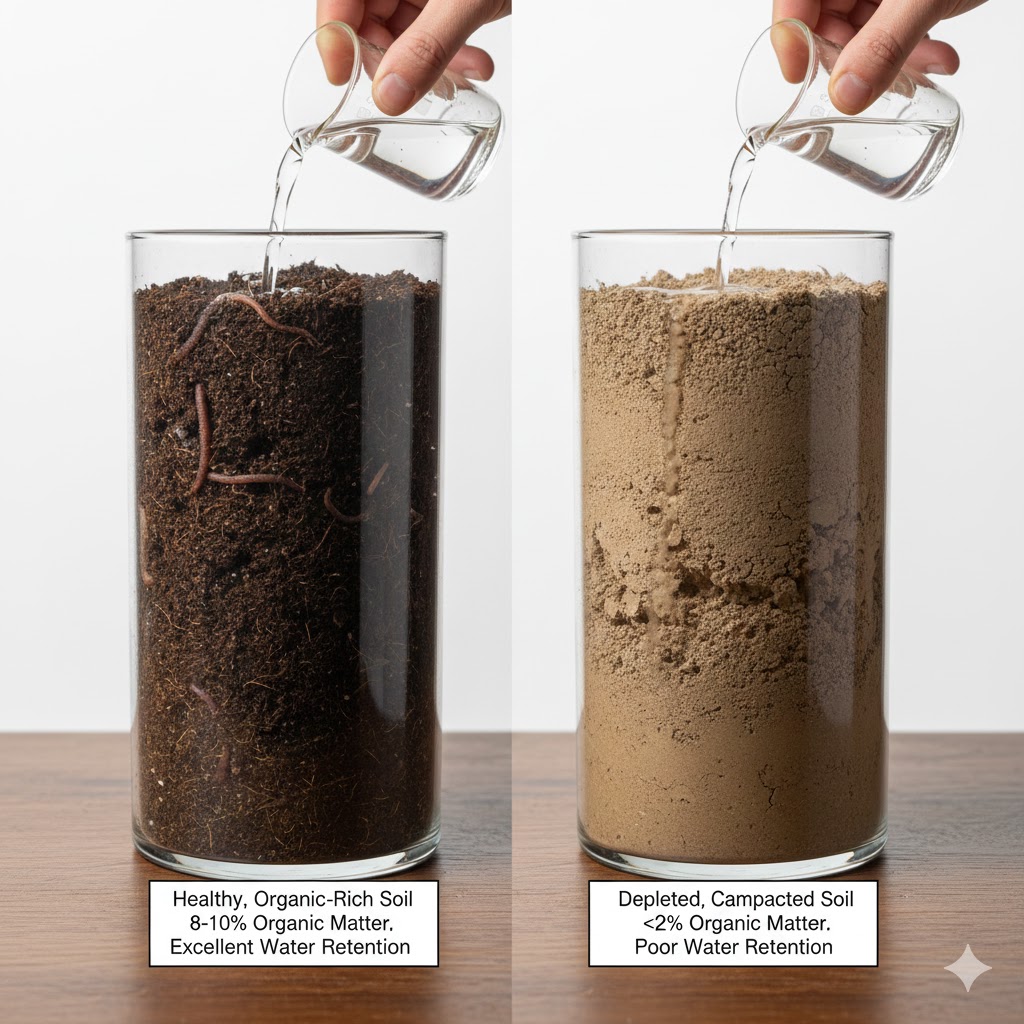
- Build organic matter in soil to improve water retention
For flood protection:
- Improve field drainage with swales or tile systems
- Create buffer strips and cover crops to slow runoff
- Grade vulnerable areas away from infrastructure
- Consider raised beds in flood-prone sections
Effective water management directly counteracts the most severe aspects of Climate Impact on Agriculture.
Step 4: Strengthen Soil Health as Climate Buffer
Healthy soil provides remarkable resilience against climate extremes.
Build organic matter:
- Use cover crops year-round (even short windows between cash crops)
- Add compost annually — target 5%+ organic matter
- Minimize tillage to preserve soil structure
- Incorporate diverse crop rotations
Why this matters:
Soil with 5% organic matter can hold 4 times more water than degraded soil with 1% organic matter. During drought, that’s the difference between crop survival and failure. During heavy rain, it’s the difference between absorption and erosion.
This strategy addresses the soil degradation component of Climate Impact on Agriculture.
Step 5: Revise Your Pest and Disease Management
Warmer winters and altered rainfall create new pest pressures.
Monitor for emerging threats:
- Track pests not historically present in your region
- Adjust scouting timing for earlier emergence
- Document disease patterns changing with humidity shifts
Adapt management strategies:
- Diversify plantings to avoid monoculture vulnerability
- Select pest-resistant varieties suited to new conditions
- Time plantings to avoid peak pest populations
- Maintain beneficial insect habitat for biological control
Understanding pest pattern shifts is crucial for managing Climate Impact on Agriculture successfully.
Step 6: Protect Infrastructure Investment
Stronger storms mean traditional building standards may be inadequate.
Evaluate structural vulnerabilities:
- Are greenhouses rated for increased snow loads?
- Can your barn roof handle 100 mph wind gusts?
- Is electrical infrastructure above flood levels?
- Do you have backup power for critical systems?
Upgrade strategically:
- Prioritize structures housing livestock or valuable equipment
- Use climate-appropriate materials (heat-resistant, wind-rated)
- Install storm shutters, reinforce anchoring, improve drainage
Physical infrastructure failures represent some of the costliest aspects of Climate Impact on Agriculture.
Step 7: Build Financial Resilience and Insurance Coverage
Climate adaptation requires capital and protection.
Explore financial resources:
- Research USDA climate-smart agriculture grants
- Investigate conservation program cost-sharing for improvements
- Apply for low-interest loans for climate adaptation infrastructure
- Join farmer networks sharing equipment and knowledge
Update insurance coverage:
- Review crop insurance for adequate coverage of climate risks
- Consider business interruption insurance
- Document baseline conditions to support claims
- Understand exclusions and coverage limits
Financial planning is essential for surviving the economic dimension of Climate Impact on Agriculture.
Common Mistakes People Make With Climate Impact on Agriculture
- Mistake: Denying climate changes or assuming it won’t affect their specific region — every agricultural zone is experiencing measurable shifts
- Mistake: Making dramatic changes all at once without testing — adaptation should start with small pilot areas
- Mistake: Relying solely on technology solutions without improving fundamental soil and water management
- Mistake: Ignoring local climate data and using only national or global projections — hyperlocal trends matter most
- Mistake: Waiting for a crisis to force changes instead of proactively adapting during stable years
- Mistake: Assuming traditional crop insurance adequately covers all climate-related losses — read your policy carefully
- Mistake: Trying to maintain the exact same operation as previous generations despite changed conditions
- Mistake: Isolating themselves instead of joining farmer networks sharing climate adaptation experiences
- Mistake: Focusing only on temperature and ignoring equally critical factors like precipitation timing and soil moisture
Expert Tips to Improve Your Results
From my two decades working with farmers navigating Climate Impact on Agriculture across diverse regions, here’s what makes the difference between farms that struggle and those that adapt successfully:
What actually works:
Start with soil. I cannot emphasize this enough — every successful climate adaptation I’ve witnessed begins with obsessive focus on soil health. Farmers who built organic matter to 6-8% weathered the 2025 drought with minimal losses while neighbors with depleted soil saw complete crop failures. Healthy soil doesn’t just help with one climate impact — it buffers against drought, flood, heat, and erosion simultaneously.
The timing insight most farmers miss:
Implement your biggest changes during good years, not crisis years. When you’re having a decent season with some breathing room, that’s when you test new varieties, install irrigation upgrades, and build soil. Farmers who wait until disaster strikes are then spending their last capital on desperate measures. The most climate-resilient operations I know made their major shifts during stable periods.
What to avoid:
Don’t chase every new “climate miracle” product marketed to desperate farmers. I’ve watched operations waste thousands on unproven technologies while neglecting basic practices like cover cropping that cost almost nothing and deliver massive resilience. If grandma wouldn’t recognize the solution, be skeptical. Soil health, water management, and crop diversity aren’t sexy, but they work.
From direct experience:
The farms thriving despite Climate Impact on Agriculture share one characteristic: they track everything. They maintain detailed records of planting dates, rainfall, temperatures, pest appearances, and yields. This data lets them spot trends before they become crises. One farmer I work with noticed his optimal corn planting had shifted 11 days earlier over a decade — but only because he’d tracked emergence rates religiously. That awareness saved him from two years of poor stands.
The mental shift that matters:
Stop trying to farm like your grandfather. I say this with tremendous respect for agricultural heritage, but climate adaptation requires accepting that 1970s-2000s patterns are gone. The farmers suffering most from Climate Impact on Agriculture are those emotionally attached to doing things “the way we’ve always done it.” Your grandfather adapted to his climate — honor him by adapting to yours.
Variations and Types of Climate Impact on Agriculture
Different farming systems experience distinct climate challenges requiring specialized responses:
- Climate Impact on Crop Agriculture — focuses on growing season shifts, heat stress tolerance, pollination disruption, and harvest timing changes for field crops and vegetables
- Climate Impact on Livestock and Ranching — addresses heat stress in animals, forage quality changes, water availability for herds, and disease vector expansion
- Climate Impact on Orchard and Perennial Systems — manages long-term crop investments facing chill hour reductions, bloom timing risks, and drought stress in established trees
- Climate Impact on Organic Farming Systems — navigates increased pest pressures and disease challenges without synthetic management tools while maintaining certification
- Climate Impact on Small-Scale and Market Gardens — adapts intensive production systems to water scarcity, extreme heat, and infrastructure vulnerability
- Climate Impact on Dryland and Rain-Fed Agriculture — develops strategies for regions where precipitation patterns are shifting dramatically without irrigation options
Each agricultural system requires tailored approaches to managing Climate Impact on Agriculture based on specific vulnerabilities and resources.
FAQs About Climate Impact on Agriculture
Final Summary
Here’s the truth: Climate Impact on Agriculture is real, it’s happening now, and it’s affecting your farm whether you acknowledge it or not. But here’s the equally important truth — farmers have always been humanity’s greatest adapters. You can absolutely protect your operation and thrive despite climate challenges.
Now that you understand the essentials — assessing your vulnerabilities, adapting crop choices, improving water and soil management, managing new pest pressures, protecting infrastructure, and building financial resilience — you can take the first step today.
Start simple this week: check your soil organic matter levels and compare your last five years of first frost dates to historical averages. Those two data points will tell you exactly where to focus your adaptation efforts.
Your farm’s future depends not on hoping weather returns to “normal,” but on building resilience for the climate that actually exists. Thousands of farms are already succeeding at this. Yours can too.
Related Resources
Essential climate adaptation resources:
- USDA Plant Hardiness Zone Map (Updated 2023) — See how your growing zone has shifted
- Climate-Resilient Crop Varieties Database — Find drought and heat-tolerant alternatives
- Soil Health Assessment Guide for Farmers — Test and improve your climate buffer
- Farm Water Management Calculator — Size irrigation needs for changing precipitation patterns
- Climate-Smart Agriculture Grant Programs — Find funding for adaptation improvements
- Regional Climate Adaptation Networks — Connect with farmers facing similar challenges