
If you’re tracking developments in australiens government reports on ai in agriculture sector, you’ve probably heard whispers about artificial intelligence transforming vineyards from traditional farms into high-tech operations. The Australian government’s 2025 reports on AI in the agriculture wine industry reveal something remarkable: this isn’t future speculation anymore—it’s happening right now, and the results are measurable.
This guide walks you through what these official reports actually say, why it matters for Australian viticulture, and what the documented outcomes mean for growers, investors, and wine enthusiasts alike. No exaggeration, no marketing spin—just the facts from government data and what they tell us about where Australian wine production is headed.
What the 2025 Government Reports Say About australiens government reports on ai in agriculture
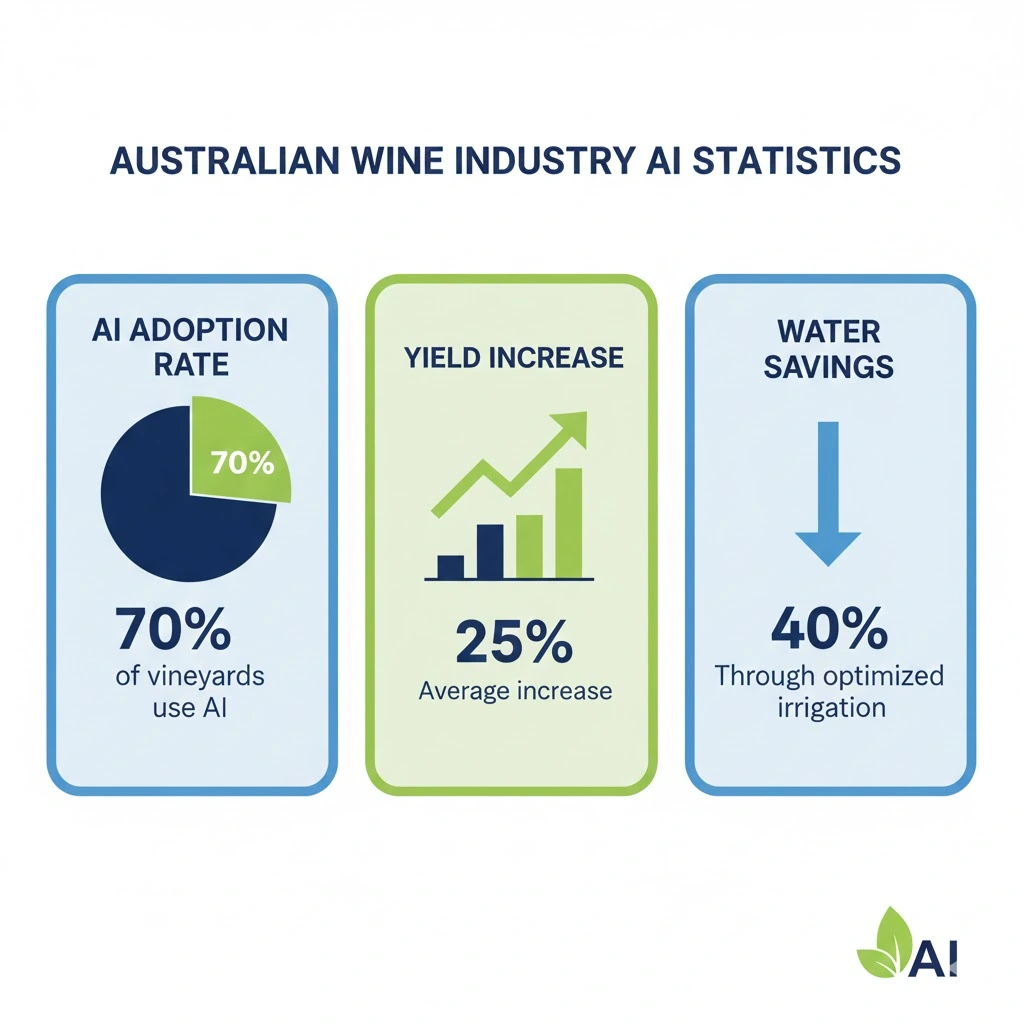
The Australian government’s 2024-2025 “Smart Vineyard Innovation Strategy” documents a watershed moment: over 70% of Australian vineyards have adopted AI-driven management practices by early 2025. This isn’t a pilot program or experimental initiative—this represents mainstream integration across the nation’s wine regions.
Key findings from the official reports:
- Yield improvements: Vineyards using AI systems reported 8-25% increases in grape yields, even as climate variability intensified
- Resource efficiency: Water usage dropped by 25-40% through precision irrigation guided by AI analysis
- Cost savings: Growers documented savings between $60-$450 per hectare depending on which AI applications they deployed
- Quality consistency: AI-monitored vineyards maintained more consistent grape quality year-over-year, crucial for premium wine production
- Sustainability gains: Fungicide use decreased by approximately 18% through early disease detection systems
These aren’t projections or hopes—they’re measured outcomes from vineyards already operating with AI integration. The government report positions Australia as a global leader in precision viticulture, with documented evidence backing that claim.
Why Australian Government Invested in AI for Viticulture
Australia’s wine industry generates billions in annual value and supports countless regional economies. But the sector faces mounting pressures that traditional farming methods struggle to address effectively.
Climate unpredictability has become the dominant challenge. Heatwaves, unexpected frosts, prolonged droughts, and erratic rainfall patterns make traditional seasonal planning increasingly unreliable. Growers who once counted on consistent weather patterns now face year-to-year uncertainty that threatens both yield and quality.
Water scarcity compounds these difficulties. Many Australian wine regions operate in areas where water resources are limited and strictly regulated. Every drop matters, yet traditional irrigation often wastes significant amounts through imprecise application.
Pest and disease pressures have intensified as changing climate conditions create environments where problems previously under control become serious threats. Early detection and rapid response have become essential rather than optional.
Global competition pushes Australian producers to differentiate on quality and sustainability credentials while managing costs. International markets increasingly demand transparency about environmental practices and product provenance.
The government recognized that addressing these interconnected challenges required systemic innovation, not incremental improvements. AI emerged as the technology capable of delivering the precision, speed, and adaptability that modern Australian viticulture demands.
How AI Actually Works in Australian Vineyards
Understanding what “AI in viticulture” means practically helps demystify the technology. Australian vineyards aren’t deploying sentient robots—they’re using specific AI applications that solve real operational problems.
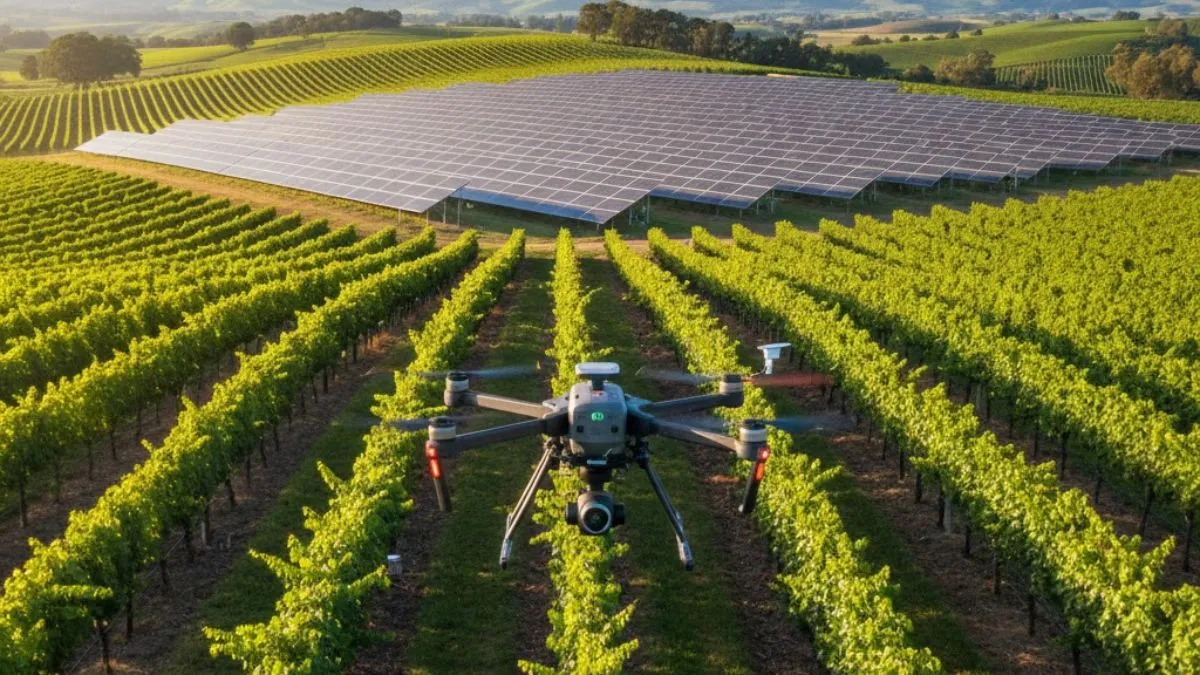
Precision monitoring systems form the foundation. Sensor networks throughout vineyards continuously measure soil moisture, vine growth rates, temperature variations, humidity levels, and microclimate conditions. Drones and satellites capture multispectral imagery that reveals plant health, nutrient deficiencies, and early signs of stress invisible to the human eye.
Machine learning algorithms process this constant data stream, identifying patterns and anomalies that would overwhelm human analysis. The AI learns what healthy vines look like in each specific vineyard block under various conditions, then flags deviations that require attention.
Predictive analytics take this further by forecasting problems before they occur. Climate models combined with vineyard-specific data predict frost risk days in advance, allowing growers to deploy protection measures proactively. Disease prediction models analyze weather patterns, historical outbreaks, and current vine conditions to estimate infection probability, enabling targeted preventive treatment rather than blanket spraying.
Yield forecasting algorithms synthesize multiple data sources—satellite imagery, in-field measurements, historical patterns, and real-time weather—to predict seasonal grape production with remarkable accuracy. This helps with everything from staffing decisions to financial planning and contract negotiations.
Automated harvest optimization uses AI to determine optimal picking times for different vineyard sections. The technology analyzes sugar accumulation, acidity levels, and weather forecasts to identify the precise window when each grape variety reaches peak quality, then coordinates harvest crews accordingly.
Quality control systems at wineries employ computer vision to inspect grapes on sorting lines, instantly identifying and removing substandard or diseased fruit before it enters production. This happens at speeds far beyond human capability while maintaining consistent standards.
Measured Outcomes: What the Data Actually Shows
Government reports provide specific metrics that move beyond theoretical benefits to documented results. Australian vineyards deploying various AI applications reported these outcomes during the 2024-2025 period:
Disease prediction and early intervention systems achieved 60% adoption rates among surveyed vineyards. Growers using these systems saw 6-10% yield improvements and approximately 18% reductions in fungicide applications. Cost savings ranged from $200-$400 per hectare through more targeted treatment protocols.
Precision irrigation systems reached 55% adoption, delivering 7-12% yield improvements while cutting water usage by roughly 25%. Documented savings of $250-$450 per hectare came primarily from reduced water costs and more efficient nutrient delivery through optimized irrigation timing.
Yield forecasting tools were adopted by 47% of surveyed operations, improving planning accuracy and reducing waste from over- or under-estimation. While yield improvements of 8-14% were documented, the greater value came from better operational planning and reduced post-harvest losses.
Harvest logistics optimization reached 44% adoption, improving harvest timing precision and reducing the window between picking and processing. This delivered 6-9% yield improvements and $80-$130 per hectare savings through reduced losses and more efficient crew deployment.
Quality control and sorting systems achieved 53% adoption at winery facilities, ensuring more consistent premium grape selection. The 8-12% yield improvements reflect better utilization of available fruit through precise quality sorting.
These numbers come directly from the government’s aggregated industry data, representing real operational experience rather than controlled experiments or vendor claims.
Sustainability Impact: Beyond Productivity
The Australian government’s emphasis on sustainability throughout its AI viticulture strategy reflects national environmental commitments and international market demands. The documented environmental benefits match or exceed productivity gains in importance.
Resource conservation shows the clearest impact. Precision irrigation reduces water consumption by 25-40% depending on vineyard conditions and AI system sophistication. This matters enormously in water-stressed regions where allocation limits constrain expansion and sustainable operations require demonstrated efficiency.
Fertilizer applications decreased similarly through precision nutrient management. AI systems analyze soil conditions and vine health to determine exactly where nutrients are needed and in what quantities, eliminating the broadcast applications that waste resources and create environmental runoff concerns.
Chemical reduction came primarily through targeted pest and disease management. Early detection systems catch problems when they’re localized, allowing spot treatment rather than preventive spraying of entire vineyard blocks. The 18% reduction in fungicide use documented in the report represents both cost savings and reduced environmental impact.
Carbon footprint monitoring gained traction as AI systems track energy consumption, input usage, and operational efficiency. This data helps vineyards document their environmental performance for export markets and sustainability certifications while identifying opportunities for further improvement.
Waste reduction happens throughout the production chain. Better harvest timing means grapes arrive at peak quality, reducing rejected fruit. Improved logistics minimize post-harvest losses. Enhanced sorting ensures only quality fruit enters production, with rejected material managed more efficiently.
The government reports position these sustainability improvements as competitive advantages in international markets where consumers and regulators increasingly scrutinize environmental practices.
Industry Structure: Who’s Leading Innovation
Australia’s AI viticulture transformation didn’t happen through individual vineyard experimentation alone. The government report highlights coordinated efforts involving research institutions, technology providers, industry associations, and growers themselves.
Innovation hubs like the Australian Wine AI Innovation Hub bring together data scientists, agronomists, viticulturists, and winemakers to develop AI applications tailored to local conditions. These centers address the reality that solutions developed for California or European vineyards don’t automatically translate to Australian climates and grape varieties.
Government-funded research programs provide the foundational work that makes commercial applications possible. Investment in sensor networks, satellite imagery analysis, and machine learning algorithms specific to viticulture created the tools that private companies now deploy at scale.
Technology platforms make sophisticated AI accessible to vineyards of various sizes. Satellite-based monitoring services eliminate the need for individual operations to deploy their own drone fleets or employ data scientists. Cloud-based analytics process complex data streams and deliver actionable recommendations through simple interfaces.
Collaborative data initiatives allow vineyards to benefit from aggregated learning while protecting competitive information. Machine learning models improve faster when trained on data from multiple operations across different regions and conditions.
This ecosystem approach explains how adoption reached 70% so quickly—individual vineyards access sophisticated technology without building everything in-house.
Implementation Challenges and Practical Realities
The government reports document impressive adoption rates and measured benefits, but they also acknowledge practical challenges that growers face when implementing AI systems.
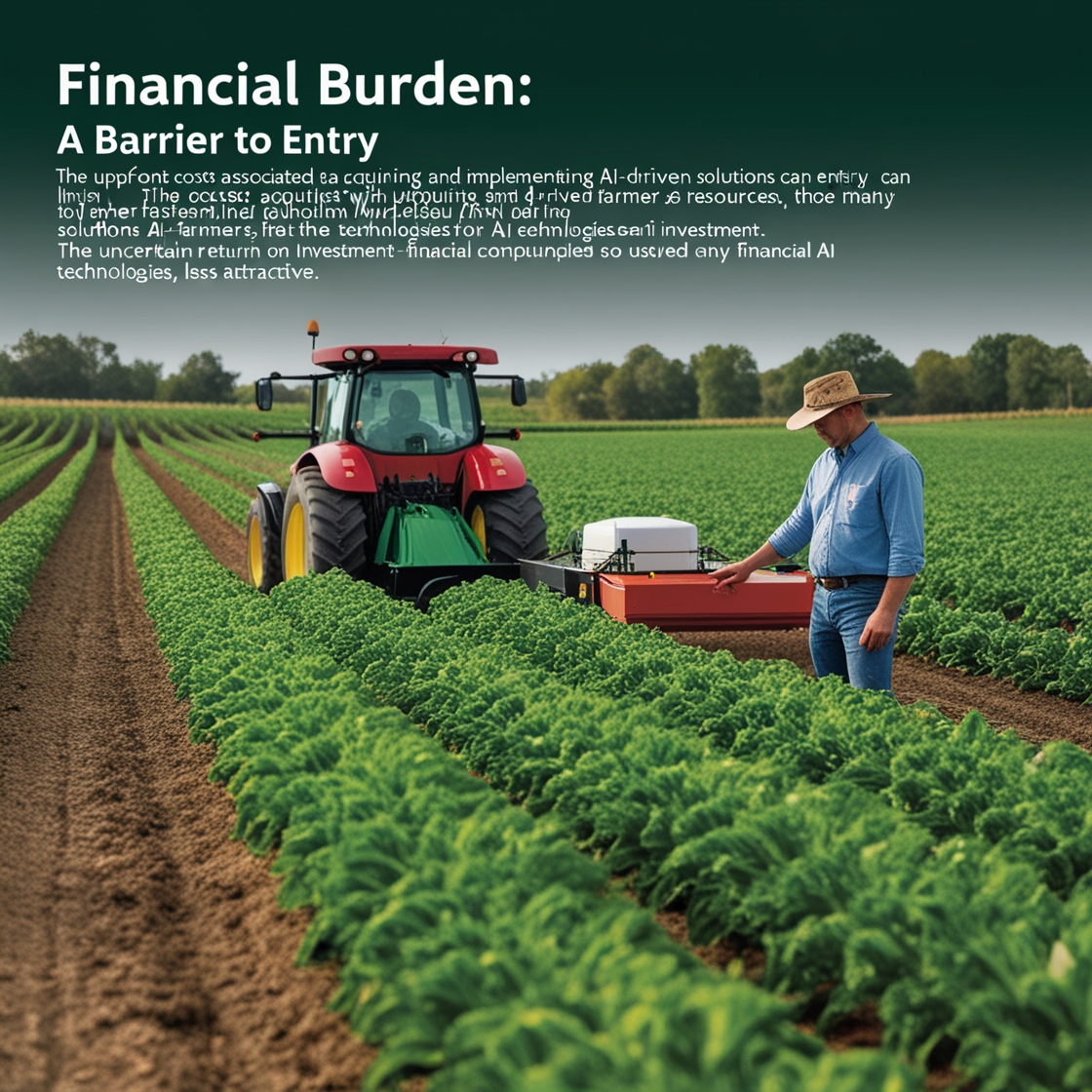
Initial investment costs create barriers, particularly for smaller operations. While long-term savings justify the expense, upfront capital requirements for sensors, connectivity infrastructure, and software subscriptions strain budgets. Government incentive programs help, but not all vineyards qualify.
Technical knowledge gaps slow adoption. Many experienced viticulturists understand grapes intimately but lack backgrounds in data analysis or digital systems. Training programs address this, but the learning curve remains real.
Connectivity limitations in rural wine regions complicate deployment of systems requiring constant data transmission. Not all vineyard locations have reliable internet access for cloud-based platforms or real-time monitoring.
Integration with existing practices requires thoughtful change management. AI systems work best when they inform decisions rather than dictate them, but finding the right balance takes time and experience. Some growers struggle to trust algorithmic recommendations over decades of personal observation.
Data privacy and ownership concerns arise as vineyards share operational information with technology platforms. Questions about who controls the data and how it might be used beyond immediate operational needs require careful contract negotiation.
The report notes these challenges while documenting that vineyards working through implementation difficulties generally report satisfaction once systems mature and deliver consistent results.
Looking Forward: Government Priorities for 2026-2027
The 2025 report outlines ongoing government priorities that will shape AI viticulture development over the next several years.
Expanding access for smaller vineyards remains a focus. While larger operations adopted AI quickly, ensuring that boutique producers and family-owned vineyards can benefit from the technology requires addressing cost and complexity barriers through subsidized programs and simplified platforms.
Enhancing supply chain integration means extending AI applications beyond vineyard management into processing, logistics, quality assurance, and market distribution. Blockchain-based traceability systems that document provenance from vine to bottle represent the next frontier.
Strengthening export competitiveness through demonstrated sustainability credentials and quality consistency. As international markets demand verifiable environmental performance, AI-generated documentation of sustainable practices becomes a competitive advantage.
Supporting workforce adaptation through training programs that help vineyard workers develop skills for AI-augmented operations. The goal isn’t replacing people but enabling them to work more effectively with intelligent systems.
Advancing climate resilience by refining predictive models that help vineyards adapt to continuing environmental changes. As climate impacts intensify, the precision and foresight that AI provides become even more valuable.
These priorities signal that government support for AI in viticulture will continue and likely expand as the technology proves its value through documented outcomes.
Frequently Asked Questions
What exactly does the Australian government report say about AI adoption in wine production?
The official 2025 government report documents that over 70% of Australian vineyards have adopted AI-driven management practices, with measured improvements in yield (8-25%), water efficiency (25-40% reduction in usage), and cost savings ranging from $60-$450 per hectare depending on applications. These are documented outcomes from operating vineyards, not projections.
How much does it cost for a vineyard to implement AI systems?
Costs vary significantly based on vineyard size and which AI applications are deployed. Basic satellite monitoring services start around $20-100 monthly, while comprehensive systems with ground sensors, predictive analytics, and full integration can run $200-1,000+ monthly. Government reports note that documented savings typically justify these investments within 2-3 years through improved yields and reduced input costs.
Do smaller Australian vineyards benefit from AI, or is this only for large operations?
The government report specifically addresses this concern, noting that cloud-based AI platforms and satellite monitoring services make sophisticated technology accessible to vineyards of all sizes. While larger operations adopted first, smaller vineyards are increasingly benefiting from scaled solutions that don’t require massive capital investment. Government incentive programs specifically target smaller producers to ensure broad access.
What role does sustainability play in the government’s AI viticulture strategy?
Sustainability is central, not peripheral, to the government’s approach. Official reports emphasize that AI’s value extends beyond productivity to environmental performance—documented reductions in water use (25-40%), chemical applications (18% for fungicides), and overall carbon footprint. These improvements help Australian wine maintain competitive advantages in export markets where environmental credentials increasingly matter.
Is AI replacing vineyard workers in Australia?
No. The government report and industry data show AI augments rather than replaces human expertise. The technology handles data analysis, pattern recognition, and repetitive monitoring, freeing experienced viticulturists to focus on strategic decisions, creative problem-solving, and tasks requiring human judgment. Workforce priorities focus on training people to work effectively with AI systems rather than being displaced by them.
Where can vineyards access the AI technologies mentioned in government reports?
Multiple technology providers serve the Australian market, from global satellite monitoring platforms to locally developed viticulture-specific solutions. The government report doesn’t endorse specific vendors but notes that accessible options exist across price points and capability levels. Industry associations and innovation hubs provide guidance on matching technologies to specific vineyard needs and conditions.
Final Perspective: What These Reports Really Mean
The Australian government’s 2025 reports on AI in the agriculture wine industry document a genuine transformation that’s already underway, not a future possibility. The 70% adoption rate, measured outcome data, and documented cost savings tell a clear story: AI has moved from experimental technology to operational standard in Australian viticulture.
What makes these reports particularly valuable is their grounding in actual results rather than theoretical potential. When government data shows vineyards saving $200-$450 per hectare while improving yields 8-25% and cutting water usage by a quarter, these aren’t marketing claims—they’re documented operational outcomes from working farms.
For Australian wine producers, the reports provide both validation and roadmap. Early adopters see their investment decisions confirmed through measured results. Those still evaluating AI get realistic expectations about costs, benefits, implementation challenges, and timeframes for return on investment.
For the global wine industry, Australia’s experience offers a case study in how AI integration happens at scale. The coordinated approach involving government support, research institutions, technology providers, and growers themselves demonstrates a pathway other wine regions might follow.
The sustainability emphasis throughout the reports reflects both environmental necessity and market reality. Australian wine competes globally on quality, but increasingly also on verifiable environmental credentfals. AI’s documented impact on resource efficiency and chemical reduction provides measurable evidence that supports marketing claims and meets regulatory requirements.
Perhaps most importantly, the reports demonstrate that AI viticulture isn’t about replacing human expertise with algorithms. It’s about giving experienced viticulturists better tools, more precise information, and earlier warnings about problems. The technology amplifies human capabilities rather than substituting for them.
As climate variability intensifies and market demands evolve, the precision, adaptability, and efficiency that AI enables will likely transition from competitive advantage to operational necessity. Australia’s early, coordinated adoption positions its wine industry to lead rather than follow this transformation.
What do Australian government reports say about AI adoption in agriculture?
Australian government reports on AI in agriculture document significant technological transformation across the sector. The official 2025 reports show that over 70% of agricultural operations, particularly in viticulture, have adopted AI-driven management systems. These government reports on AI in agriculture highlight measured improvements including 8-25% yield increases, 25-40% reductions in water usage, and cost savings ranging from $60-$450 per hectare depending on applications deployed. The reports position Australia as a global leader in precision agriculture adoption.
How does the Australian government support AI implementation in agriculture according to recent reports?
The Australian government reports on AI in agriculture outline comprehensive support strategies through the “Smart Vineyard Innovation Strategy” and related programs. Government funding supports innovation hubs bringing together data scientists and agronomists, subsidized access to satellite monitoring technology for smaller farms, research programs developing AI applications for local conditions, and incentive schemes encouraging sustainable technology adoption. These government reports on AI in agriculture emphasize that coordinated support between federal programs, research institutions, and industry partnerships accelerated adoption rates from experimental to mainstream implementation within 2-3 years.
What specific agricultural improvements do Australian government reports attribute to AI technology?
Australian government reports on AI in agriculture document specific, measurable outcomes across multiple operational areas. Disease prediction systems achieved 60% adoption with 6-10% yield improvements and 18% reductions in chemical usage. Precision irrigation systems reached 55% adoption delivering 25-40% water savings. The government reports on AI in agriculture also note improved harvest logistics, quality control through computer vision, and enhanced supply chain traceability. Environmental benefits documented in these Australian government reports on AI in agriculture include significant carbon footprint reductions, minimized chemical runoff, and improved compliance with sustainability standards—outcomes that strengthen Australia’s competitive position in global agricultural markets.