
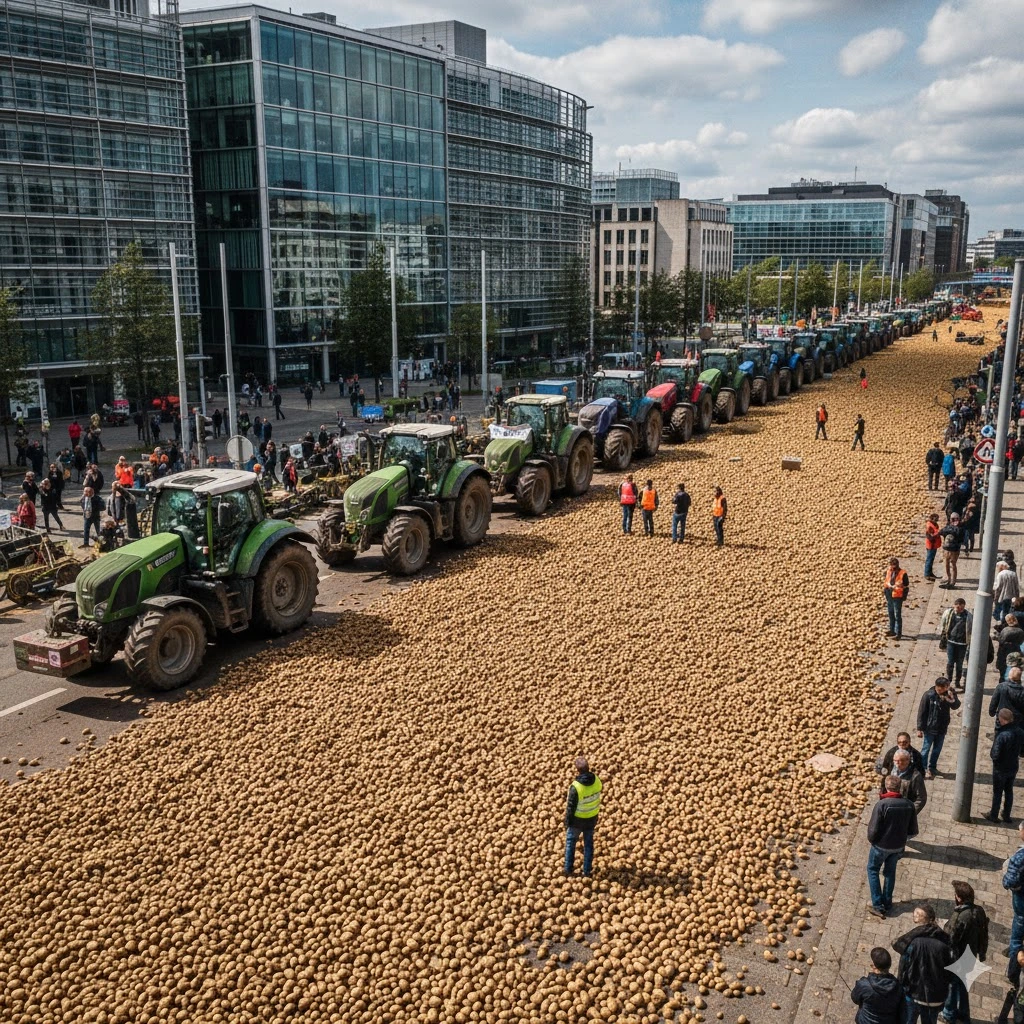
The farmer’s protest in Brussels, streets buried under potatoes, became one of the most visually striking demonstrations in recent European history. When thousands of agricultural workers drove their tractors into Belgium’s capital and dumped tons of produce across major thoroughfares, the world took notice. This wasn’t just another protest—it was a powerful statement about the crisis facing European agriculture.
If you’ve seen the dramatic images circulating online, you’re probably wondering what drove farmers to such extreme measures. The answer reveals deep tensions between agricultural communities, EU policymakers, and the economic realities of food production in 2024.
Let me explain exactly what happened during this farmer’s protest in Brussels, streets buried under potatoes and other crops, and why this matters to everyone who eats food.
Table of Contents
Table of Contents
What Happened: The Farmer’s Protest In Brussels, Streets Buried Under Potatoes
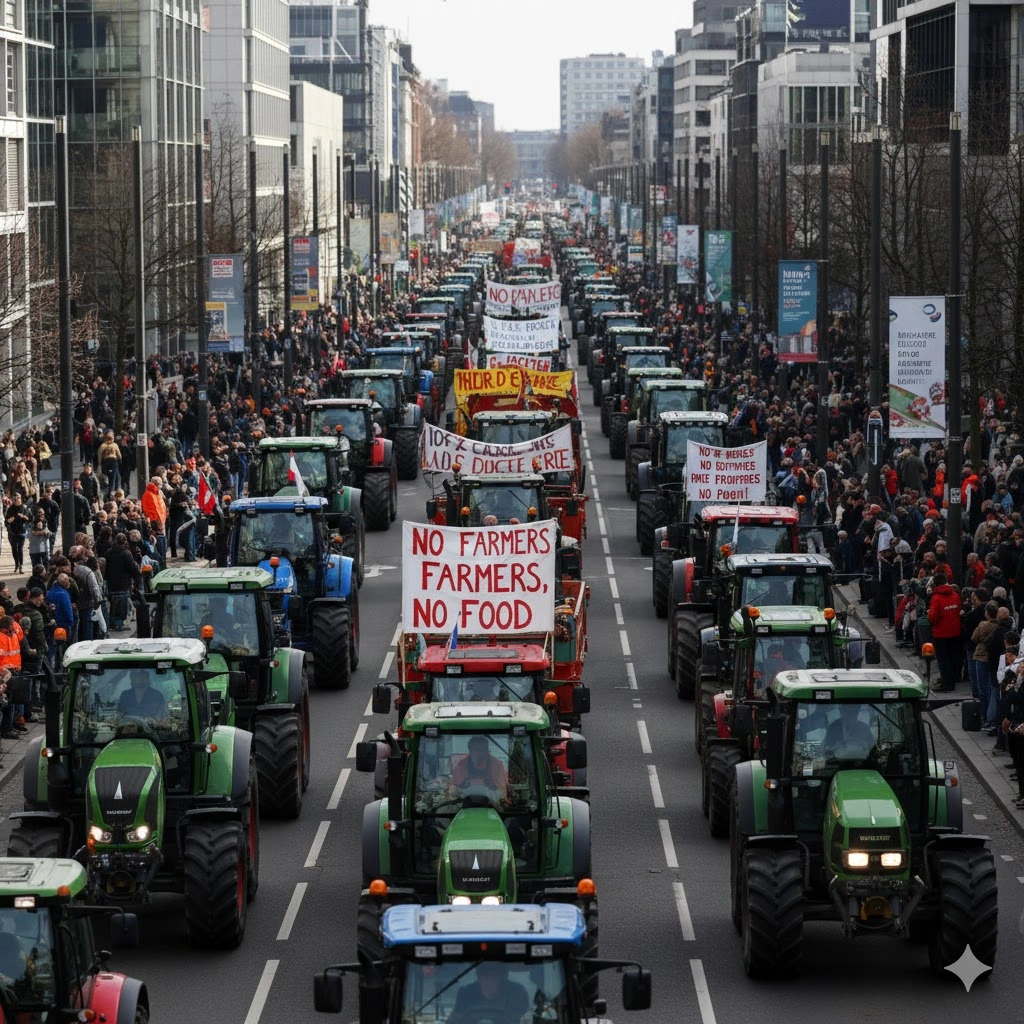
European farmers organized coordinated protests that brought Brussels to a standstill. The farmer’s protest in Brussels, streets buried under potatoes, involved:
- Hundreds of tractors converging from Belgium, France, Netherlands, and Germany
- Tons of potatoes dumped strategically near EU Parliament and Commission buildings
- Multiple days of demonstrations disrupting normal city operations
- Mass participation from agricultural workers across multiple countries
- Media coverage worldwide showing the scale of farmer frustration
The protest organizers chose potatoes deliberately. These staple crops created massive visual impact when piled high on Brussels cobblestones, forcing policymakers and media to pay attention to agricultural concerns.
Why This Farmer’s Protest In Brussels, Streets Buried Under Potatoes Happened
The farmer’s protest in Brussels, streets buried under potatoes, stemmed from multiple converging crises:
Collapsing Farm Economics
Many farmers reported receiving prices below production costs. When selling potatoes at market rates meant losing money on every ton, the farmer’s protest in Brussels, streets buried under potatoes, became a way to demonstrate this broken economic model visually.
Production expenses skyrocketed:
- Fertilizer costs increased by 150-200% in some regions
- Fuel prices remained elevated
- Equipment and maintenance became more expensive
- Labor costs continued rising
Meanwhile, the prices farmers received for potatoes and other crops stagnated or fell, creating an impossible math problem.
Overwhelming Regulatory Pressure
New EU environmental regulations arrived faster than farmers could adapt. The farmer’s protest in Brussels, streets buried under potatoes, expressed frustration with:
- Strict pesticide reduction targets without viable alternatives
- Nitrogen emission limits affecting fertilizer use
- Complex reporting requirements adding administrative burden
- Short implementation timelines for expensive changes
Farmers emphasized they support environmental goals but need realistic timelines and financial support for transitions.
Import Competition Concerns
Trade policies allowed cheaper agricultural products into European markets while local farmers faced stricter standards. This inequality fueled anger that manifested in the farmer’s protest in Brussels, streets buried under potatoes demonstration.
Climate-Related Crop Failures
Extreme weather destroyed harvests with increasing frequency. Droughts, floods, and unseasonable temperatures created unpredictable losses that insurance didn’t fully cover. For many participants in the farmer’s protest in Brussels, streets buried under potatoes event, climate impacts were the final straw.
The Symbolism Behind Streets Buried Under Potatoes
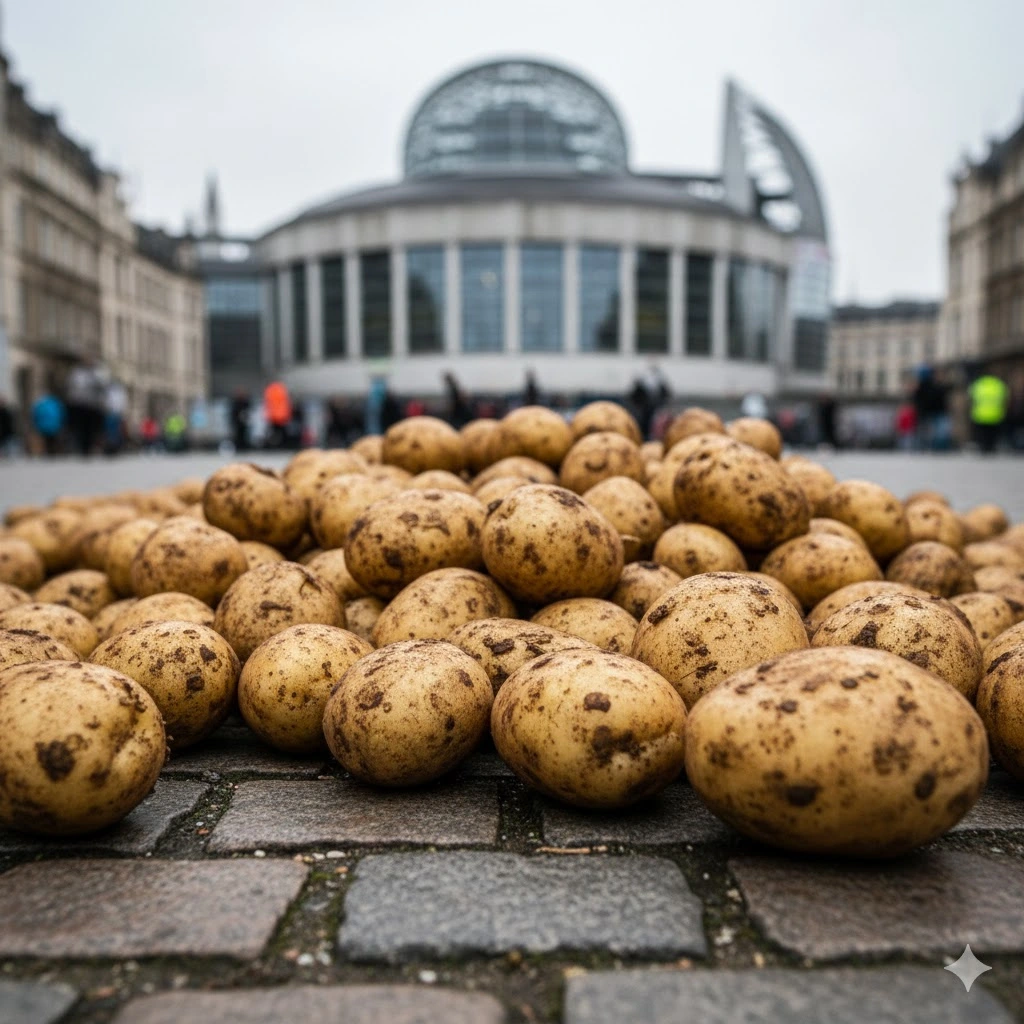
The farmer’s protest in Brussels, streets buried under potatoes, used food waste as powerful symbolism:
Visual Impact: Tons of potatoes scattered across historic Brussels streets created unavoidable images that dominated news coverage. The farmer’s protest in Brussels, streets buried under potatoes, generated more attention than traditional demonstrations.
Economic Statement: Dumping sellable crops illustrated that current market prices made harvesting and selling more expensive than waste. The farmer’s protest in Brussels, streets buried under potatoes, showed this economic reality physically.
Emotional Resonance: Wasting food during global food security concerns created uncomfortable questions about agricultural policy failures that led to the farmer’s protest in Brussels, streets buried under potatoes.
Cultural Message: Potatoes represent European staple agriculture. The farmer’s protest in Brussels, streets buried under potatoes, used this symbolism deliberately to represent threats to food production foundations.
How the Farmer’s Protest In Brussels, Streets Buried Under Potatoes Unfolded
The protest developed over several intense days:
Early Morning Arrivals: Tractor convoys began entering Brussels before dawn. The farmer’s protest in Brussels, streets buried under potatoes, started with coordinated arrivals from multiple directions, making it difficult for authorities to redirect protesters.
Strategic Dumping: Farmers targeted symbolic locations. The farmer’s protest in Brussels, streets buried under potatoes, focused on EU institutional buildings where agricultural policies originated.
Peak Participation: Thousands of farmers gathered, creating one of the largest agricultural demonstrations in recent memory. The farmer’s protest in Brussels, streets buried under potatoes, involved participants from at least six European countries.
Standoff Period: Protesters remained for days, maintaining pressure. The farmer’s protest in Brussels, streets buried under potatoes, continued until officials agreed to negotiations.
Cleanup Operations: Eventually, authorities cleared the dumped produce. The farmer’s protest in Brussels, streets buried under potatoes, left lasting impressions even after streets were cleaned.
Response to the Farmer’s Protest In Brussels, Streets Buried Under Potatoes
EU officials couldn’t ignore the farmer’s protest in Brussels, streets buried under potatoes. Responses included:
- Emergency meetings with agricultural representatives
- Temporary regulatory adjustments in affected regions
- Financial support packages announced for struggling sectors
- Promises to review trade agreements
- Commitments to improve policy communication
However, many farmers considered these responses insufficient. The underlying issues that sparked the farmer’s protest in Brussels, streets buried under potatoes, remained largely unaddressed.
What the Farmer’s Protest In Brussels, Streets Buried Under Potatoes Means for Food Security
The farmer’s protest in Brussels, streets buried under potatoes, raised critical questions about European food systems:
Production Sustainability: When farmers can’t remain economically viable, who will produce food? The farmer’s protest in Brussels, streets buried under potatoes, highlighted this existential question.
Supply Chain Vulnerability: Dependence on imports creates security risks. The farmer’s protest in Brussels, streets buried under potatoes, emphasized the value of local production capacity.
Rural Community Survival: Farming sustains rural economies. When agriculture fails, entire regions empty out—a reality the farmer’s protest in Brussels, streets buried under potatoes, brought to urban attention.
Policy Balance: The farmer’s protest in Brussels, streets buried under potatoes, demonstrated tensions between environmental ambitions and economic realities that must be reconciled.
Farmer Demands Following the Protest
After the farmer’s protest in Brussels, streets buried under potatoes, agricultural representatives outlined clear demands:
- Fair pricing mechanisms ensuring production costs are covered
- Gradual environmental transitions with adequate financial support
- Balanced trade policies protecting local producers from unfair competition
- Regulatory simplification acknowledging farming operation realities
- Long-term planning support enabling confident farm investments
- Professional recognition for agriculture’s societal role
These demands from the farmer’s protest in Brussels, streets buried under potatoes, focused on economic viability more than resistance to environmental responsibility.
Similar Protests Beyond Brussels
The farmer’s protest in Brussels, streets buried under potatoes, wasn’t isolated. Similar demonstrations occurred across:
- Netherlands: Nitrogen policy protests shut down highways
- France: Agricultural workers blocked Paris routes
- Germany: Farmers demonstrated against fuel subsidy cuts
- India: Massive agricultural protests challenged market reforms
- Canada: Farm demonstrations addressed regulatory concerns
The farmer’s protest in Brussels, streets buried under potatoes, represented a broader global pattern of agricultural frustration with modernization policies that ignore economic realities.
Long-term Implications
The farmer’s protest in Brussels, streets buried under potatoes, will likely influence:
Future EU Policy: Agricultural regulations may evolve more carefully considering economic impacts highlighted by the farmer’s protest in Brussels, streets buried under potatoes.
Trade Negotiations: Import standards may receive more scrutiny after the farmer’s protest in Brussels, streets buried under potatoes, demonstrated local producer concerns.
Environmental Transitions: The pace and support for green agriculture may adjust based on lessons from the farmer’s protest in Brussels, streets buried under potatoes.
Political Landscapes: Rural voting patterns shifted following the farmer’s protest in Brussels, streets buried under potatoes, as agricultural communities mobilized politically.
What You Can Learn From This Protest
The farmer’s protest in Brussels, streets buried under potatoes, offers insights for everyone:
- Food has real costs that market prices don’t always reflect
- Policy changes need economic support to be sustainable
- Local food production matters for security and resilience
- Agricultural communities deserve voice in policies affecting them
- Environmental goals require practical implementation strategies
FAQ
What exactly was the farmer’s protest in Brussels, streets buried under potatoes?
The farmer’s protest in Brussels, streets buried under potatoes, was a coordinated demonstration where European agricultural workers dumped tons of produce on Brussels streets to protest unfair pricing, strict regulations, and economic pressures threatening farm viability. Thousands participated over multiple days.
Why did farmers choose potatoes for the Brussels protest?
Potatoes provided visual impact and symbolism for the farmer’s protest in Brussels, streets buried under potatoes. As staple crops, they represented fundamental agriculture, and their bulk created dramatic imagery that media couldn’t ignore, effectively communicating farmer frustration.
Did the farmer’s protest in Brussels, streets buried under potatoes, achieve results?
The farmer’s protest in Brussels, streets buried under potatoes, generated significant attention and prompted some EU policy responses, including emergency funding and temporary regulatory adjustments. However, many farmers felt core economic issues remained unresolved, suggesting partial success.
How much produce was dumped during the protest?
Reports indicated dozens of tons of potatoes plus eggs, hay, and other products during the farmer’s protest in Brussels, streets buried under potatoes. Exact quantities varied by day, with peak protest days seeing the largest amounts dumped.
Are farmers still protesting in Brussels?
While the specific farmer’s protest in Brussels, streets buried under potatoes, has ended, agricultural demonstrations continue periodically across Europe as underlying economic pressures persist. Farmers return to protest when new policies or market conditions trigger renewed frustration.
What regulations sparked the farmer’s protest in Brussels, streets buried under potatoes?
The farmer’s protest in Brussels, streets buried under potatoes, targeted multiple EU environmental regulations including pesticide reduction requirements, nitrogen emission limits, biodiversity land-use rules, and various reporting requirements that farmers considered economically unsustainable without adequate transition support.
Moving Forward
The farmer’s protest in Brussels, streets buried under potatoes, revealed fractures in European agricultural policy that won’t heal quickly. These demonstrations showed that environmental ambitions must align with economic realities for farmers to remain viable.
The images of Brussels streets buried under potatoes will persist as reminders that food production depends on real people making economic decisions. When those economics break down, the system breaks down—and we all depend on that system.
Whether you’re directly involved in agriculture or simply someone who values food security, the farmer’s protest in Brussels, streets buried under potatoes, carries important lessons. Sustainable agriculture requires sustainable economics, practical transition support, and genuine dialogue between policymakers and producers.
The potatoes may be cleared from Brussels streets, but the questions raised by the farmer’s protest in Brussels, streets buried under potatoes, remain urgent and unanswered.
Farm Financing in 2026 : The Complete Guide You