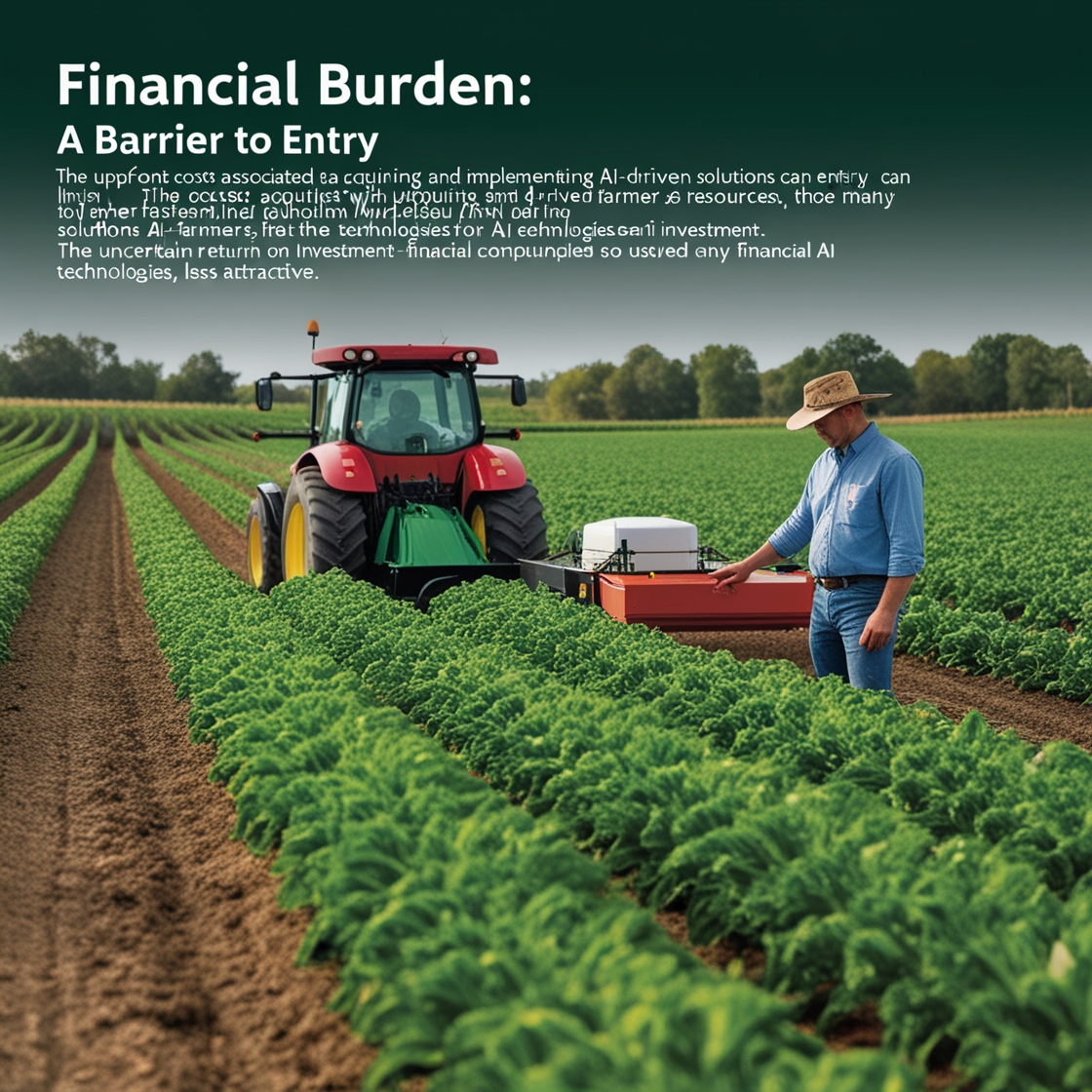

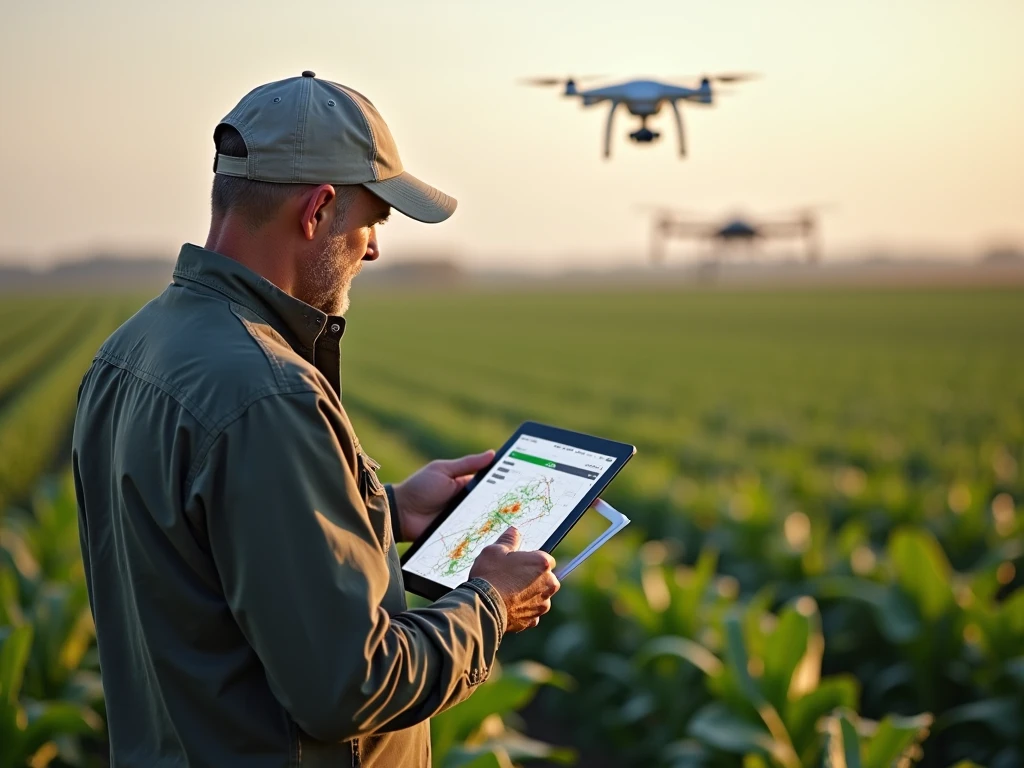
Invest in Farm Drones in 2026 : The Complete Guide You Can Actually Trust (Simple, Clear & Backed by Expertise)
If you’re looking to understand whether you should Invest in Farm Drones in 2026, this guide is designed to give you everything you need in one place. No complex technical jargon, no confusing specifications — just real, human-centered clarity that helps you understand costs, calculate ROI, and decide if drone technology makes financial sense for your farming operation. Whether you’re searching for actual cost breakdowns, proven use cases from working farms, or simply want to determine if the investment pays off, this guide breaks things down step by step.
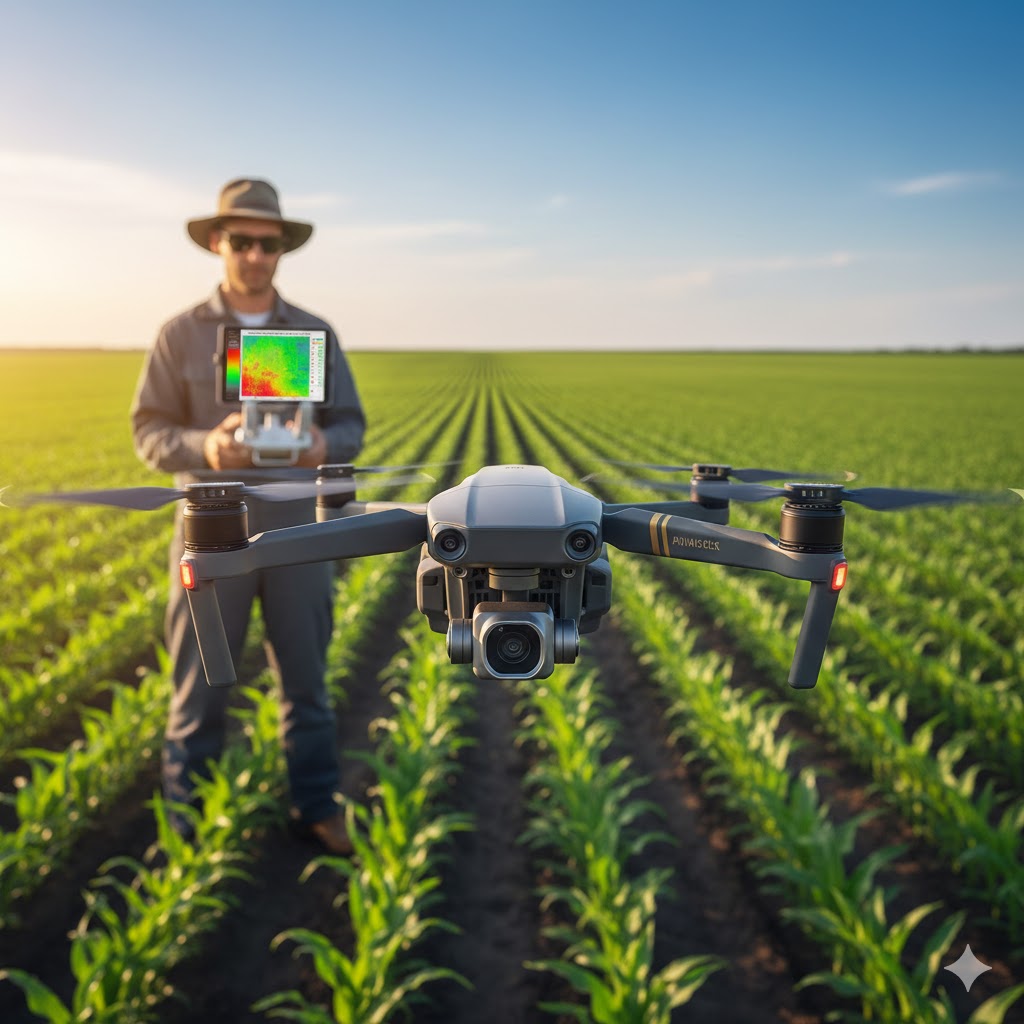
Guide You Can Actually Trust
Quick Summary
Here’s a fast overview for readers :
- ⭐ Main Topic: Invest in Farm Drones in 2026
- 🎯 Primary Purpose: Evaluate costs, ROI, and practical use cases to make informed drone investment decisions
- 🧠 Why It Matters: Farmers using drones save 15-30% on inputs through precision application and catch crop problems 2-3 weeks earlier than traditional scouting
- ⏳ Reading Time: 3 minutes
- 🧩 Who It Helps: Mid-size farmers (100+ acres), precision agriculture adopters, crop consultants, and operations considering technology upgrades
What Does It Mean to Invest in Farm Drones in 2026?
When farmers decide to Invest in Farm Drones in 2026, they’re purchasing unmanned aerial vehicles (UAVs) equipped with specialized cameras and sensors designed specifically for agricultural applications. These aren’t recreational drones — they’re precision farming tools that capture multispectral imagery, thermal data, and high-resolution photos to monitor crop health, assess field conditions, and guide management decisions.
Modern agricultural drones range from $1,500 entry-level models for basic aerial photography to $25,000+ professional systems with advanced multispectral sensors, automated flight planning, and AI-powered analytics software.
The decision to Invest in Farm Drones in 2026 involves:
- Hardware costs — the drone itself, batteries, controllers, and accessories
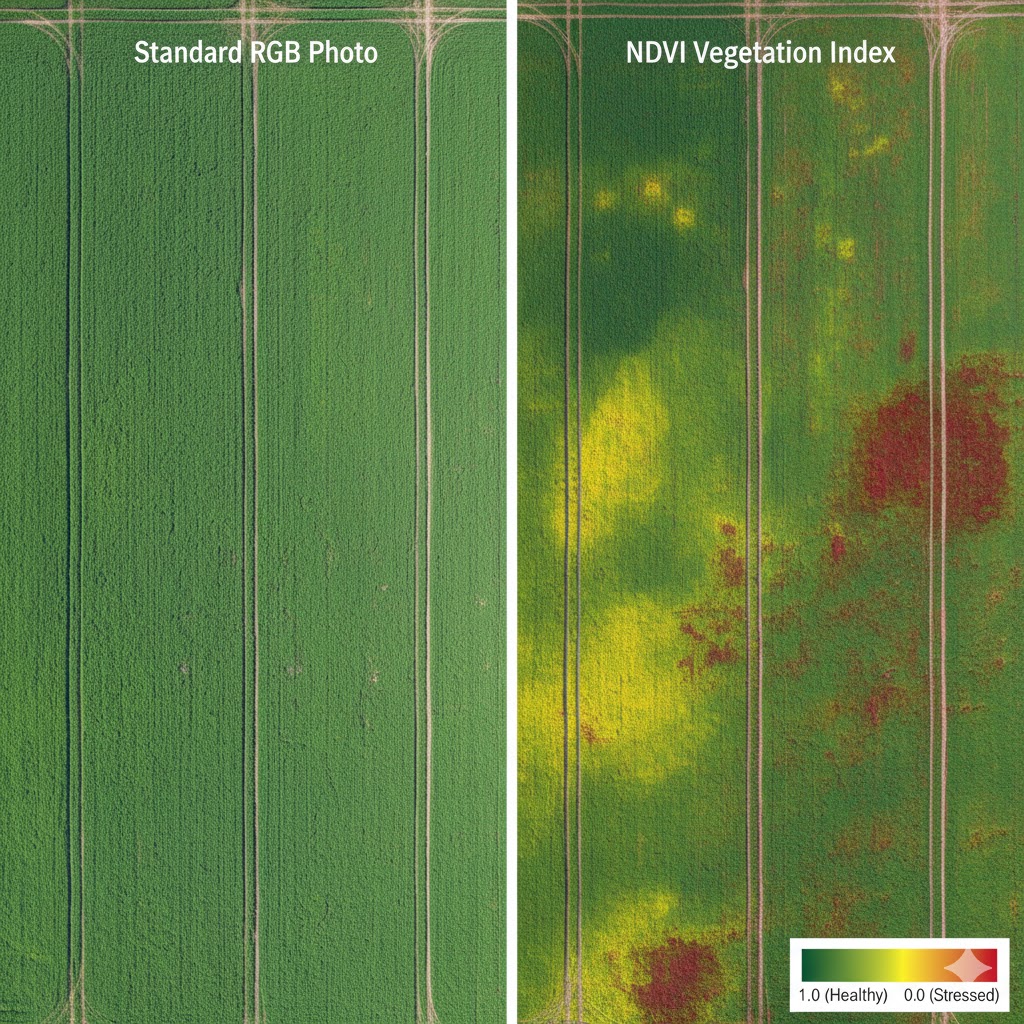
- Sensor technology — RGB cameras (standard photos), multispectral sensors (NDVI crop health), thermal cameras (irrigation assessment)
- Software subscriptions — flight planning apps, data processing platforms, and crop analytics tools
- Training and certification — learning to fly, understanding data interpretation, and meeting FAA Part 107 requirements
- Operational integration — incorporating drone data into existing farm management systems
- Maintenance and insurance — battery replacement, repairs, and liability coverage
Key entities related to farm drone investment include:
- Precision agriculture — data-driven farming using GPS, sensors, and variable rate technology
- NDVI imaging — Normalized Difference Vegetation Index showing crop health and stress
- Variable rate application — adjusting inputs based on field variability detected by drones
- Remote sensing — collecting information about crops without physical contact
- FAA Part 107 — commercial drone pilot certification required for agricultural use
- Prescription maps — field application maps created from drone data for sprayers and fertilizer equipment
- Drone service providers — companies offering custom drone flights as alternative to ownership
Why You Should Consider Investing in Farm Drones in 2026
Real Value and Critical Problems Solved
Understanding whether to Invest in Farm Drones in 2026 solves several important farming challenges:
What problem it solves:
Traditional crop scouting is time-consuming, covers limited acreage, and often discovers problems too late for effective intervention. Walking fields might catch 30-40% of issues before they impact yields. Drones provide complete field coverage in minutes, revealing patterns invisible from ground level, and identifying problems while they’re still manageable.
Why people search for it:
Farmers face mounting pressure to reduce input costs while maintaining yields. Fertilizer, pesticide, and water expenses continue rising. The ability to apply inputs only where needed — precisely targeted based on actual crop stress rather than uniform field applications — can cut costs by 15-35% while improving environmental outcomes. This ROI potential drives massive interest in farm drone technology.
Additionally, labor shortages make traditional field walking less practical. One farmer with a drone can assess 200+ acres daily versus 20-30 acres on foot.
What happens if they ignore drone technology:
Farms that don’t adopt precision agriculture tools including drones face several disadvantages:
- Continued over-application of expensive inputs across entire fields rather than targeted zones
- Discovering pest, disease, or nutrient deficiency problems 2-4 weeks later than drone-equipped competitors
- Higher labor costs for manual scouting that covers less ground with inferior data
- Inability to create variable rate prescription maps for precision equipment
- Missing irrigation inefficiencies costing thousands in wasted water and stressed crops
- Difficulty competing with operations using data-driven decision making
- Lower land values as precision agriculture capability becomes standard buyer expectation
Benefits backed by experience and studies:
Farmers who strategically Invest in Farm Drones in 2026 report:
- 20-30% reduction in crop protection chemical use through precise spot treatment
- 15-25% decrease in fertilizer costs via variable rate application guided by NDVI maps
- Detection of irrigation failures or equipment problems within hours versus days/weeks
- $15-40 per acre annual value from improved crop management decisions
- 85% reduction in time spent scouting large fields (200 acres in 45 minutes versus 2-3 days walking)
- Earlier pest and disease intervention preventing 10-30% yield losses
- Improved crop insurance documentation with time-stamped aerial evidence
A 2025 Purdue University study found farms using drone-based NDVI imaging for nitrogen management reduced fertilizer application by 22% on average while maintaining or slightly increasing yields — creating net savings of $28-45 per acre annually on corn.
Research from multiple land-grant universities consistently shows drone technology pays for itself within 1-3 seasons when used for actionable decision-making rather than just pretty pictures.
Step-by-Step Guide: How to Invest in Farm Drones in 2026
Step 1: Define Your Specific Use Cases and Goals
Before spending money, get absolutely clear on what you’ll actually use drones for.
Identify your primary applications:
- Crop health monitoring — weekly or bi-weekly NDVI imagery to track nitrogen needs and stress
- Pest and disease scouting — identifying problem areas for targeted ground verification
- Irrigation management — thermal imaging to find leaks and assess soil moisture distribution
- Stand counts and emergence evaluation — documenting planting success and gaps
- Yield estimation — pre-harvest biomass assessment for planning
- Field mapping and documentation — creating current aerial imagery for records and planning
Set measurable ROI expectations:
Calculate potential savings from your specific use cases. If you farm 500 acres of corn and could reduce nitrogen by 20 pounds/acre through precision management, that’s 10,000 pounds saved. At $0.60/pound, that’s $6,000 annual savings minus software costs.
This clarity ensures your decision to Invest in Farm Drones in 2026 serves real operational needs rather than technology fascination.
Step 2: Determine Your Budget and System Requirements
Drone investment ranges from $2,000 to $30,000+ depending on capabilities needed.
Budget tiers and capabilities:
Entry Level ($1,500-$4,000):
- DJI Mavic 3 or similar consumer drones with RGB cameras
- Good for basic aerial photography and visual field assessment
- Limited crop health analysis capability
- No multispectral sensing
- Best for small operations or testing drone concepts
Mid-Range Agricultural ($5,000-$12,000):
- DJI Mavic 3 Multispectral or Phantom 4 Multispectral
- Integrated RGB and multispectral sensors
- NDVI and vegetation index capabilities
- Flight planning software included
- Suitable for most farm applications 200-2,000 acres
Professional Systems ($15,000-$30,000+):
- DJI Agras or specialized ag platforms
- Advanced multispectral sensors (5+ bands)
- Thermal imaging options
- Extended flight time (30-45 minutes)
- RTK GPS for cm-level accuracy
- Best for large operations, custom applicators, or service providers
Add these costs to your budget:
- Extra batteries: $150-300 each (need 3-4 minimum)
- Software subscriptions: $300-1,500/year for processing and analysis
- Insurance: $500-1,200/year for liability coverage
- Training/certification: $150-500 for Part 107 study materials
- Storage and transport case: $200-500
Many farmers considering whether to Invest in Farm Drones in 2026 underestimate total cost of ownership beyond the drone itself.
Step 3: Research Models and Read Real User Reviews
Don’t rely solely on manufacturer specifications — seek actual farmer experiences.
Top agricultural drone models for 2026:
DJI Mavic 3 Multispectral:
- $5,500-6,500
- Most popular mid-range agricultural drone
- RGB + 4-band multispectral camera
- 43-minute flight time
- RTK module available
- Excellent for grain and row crop monitoring
DJI Phantom 4 Multispectral:
- $6,000-7,000
- Proven reliability in agricultural use
- RGB + 5-band multispectral
- Dedicated NDVI output
- Stabilized in windy conditions
- Good for vegetable and specialty crops
Sentera PHX:
- $8,000-12,000
- Purpose-built agricultural platform
- Modular sensor system
- High-resolution NDVI
- Excellent technical support
- Popular among crop consultants
DJI Agras T40:
- $15,000-20,000
- Ag spraying and spreading capability
- Also useful for imaging with add-on sensors
- 40kg payload capacity
- Best for large operations doing custom application
Check farmer forums, YouTube channels focused on precision ag, and university extension reviews before deciding to Invest in Farm Drones in 2026.
Step 4: Calculate Your Specific ROI
Use conservative estimates to determine if investment makes financial sense.
ROI calculation framework:
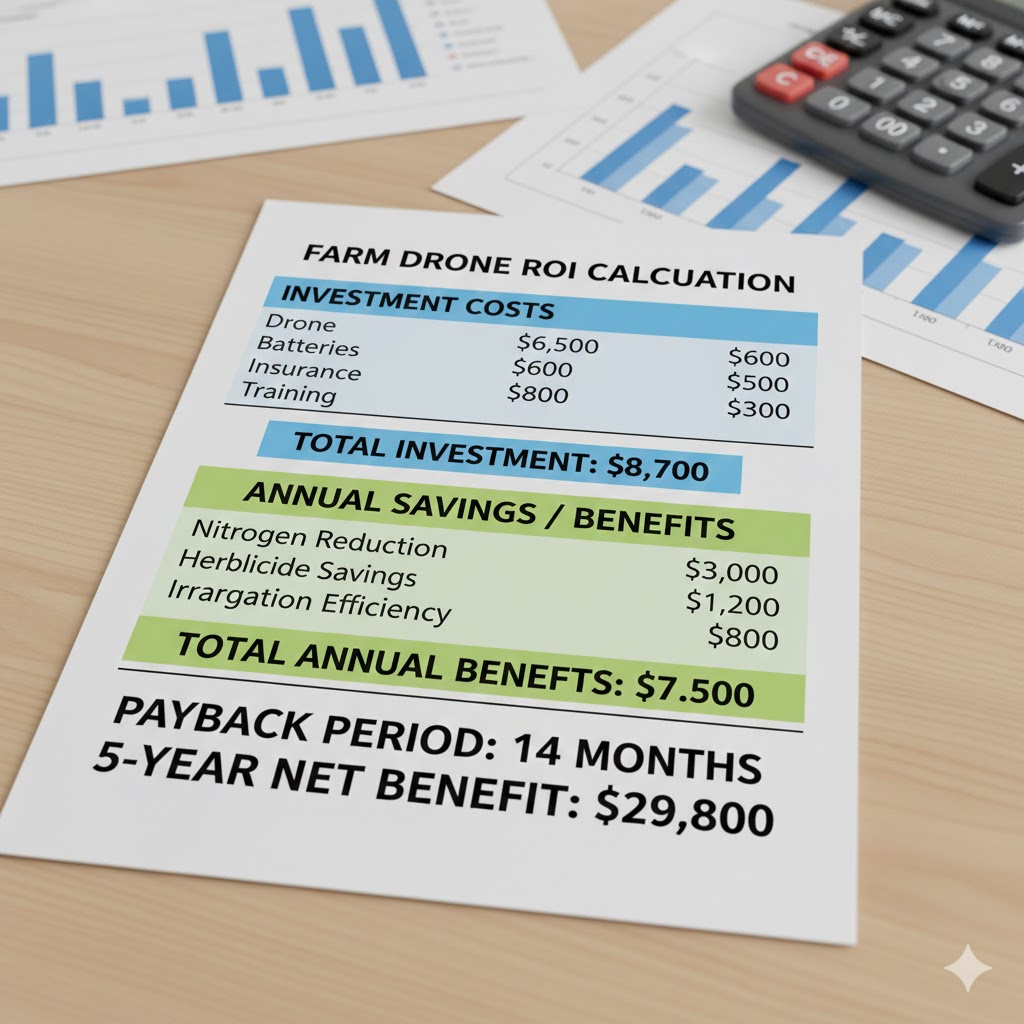
Total Investment:
- Drone system: $6,500
- Extra batteries (3): $600
- Software (annual): $500
- Insurance (annual): $800
- Training: $300
- Total Year 1: $8,700
- Ongoing annual: $1,300
Expected Returns (500 acres corn/soybeans):
- Nitrogen reduction (20 lbs/acre on 250 acres corn): $3,000
- Herbicide spot treatment savings (15% on 500 acres): $1,200
- Early pest detection preventing loss (5% of 50 acres): $2,500
- Irrigation efficiency improvements: $800
- Total Annual Benefit: $7,500
Payback Period: 1.16 years (14 months)
5-Year Net Benefit: $29,800
If your calculation shows 3+ year payback, reconsider whether to Invest in Farm Drones in 2026 or explore service providers instead.
Step 5: Get Properly Trained and Certified
Legal operation requires FAA Part 107 certification for commercial agricultural use.
Certification requirements:
- Pass FAA Part 107 knowledge test (60 questions, 70% to pass)
- Study materials available online ($50-200) or through courses
- Test costs $175 at FAA-approved centers
- Background check required
- Certificate valid 2 years before recertification needed
Essential skills beyond certification:
- Flight planning for complete field coverage
- Understanding lighting conditions for best imagery
- Image processing and data interpretation
- Converting NDVI data to actionable management decisions
- Integration with precision agriculture equipment
Many manufacturers offer free online training specific to their platforms. Take advantage of these resources when you Invest in Farm Drones in 2026.
Step 6: Start Small and Prove Value Before Scaling
Don’t try to reinvent your entire operation immediately.
Progressive implementation:
Season 1:
- Focus on 100-200 acres of one or two fields
- Fly weekly during critical growth phases
- Document specific decisions made from drone data
- Track measurable outcomes (input reduction, yield comparison)
Season 2:
- Expand to additional fields based on proven value
- Integrate with variable rate equipment
- Refine flight timing and data processing workflow
Season 3:
- Full farm implementation if ROI demonstrated
- Consider additional sensors or capabilities
- Share learnings with farming neighbors
This staged approach reduces risk and validates whether your decision to Invest in Farm Drones in 2026 delivers promised returns.
Step 7: Integrate Drone Data Into Existing Farm Management
Drones generate tremendous data — value comes from using it effectively.
Data workflow integration:
Capture: Fly fields on regular schedule (weekly, bi-weekly, or as-needed)
Process: Upload images to processing software (DroneDeploy, Pix4D, Sentera FieldAgent) to generate NDVI and other vegetation index maps
Analyze: Identify stress zones, problem areas, and field variability patterns
Act: Create prescription maps for variable rate application or direct ground-truthing to specific areas
Document: Keep time-stamped imagery for insurance, record-keeping, and year-over-year comparison
Evaluate: Track correlation between drone-identified issues and actual yield outcomes
Farmers who successfully Invest in Farm Drones in 2026 make this workflow routine rather than sporadic.
Common ” 9 ” Mistakes People Make When Investing in Farm Drones in 2026
- Mistake: Buying the cheapest consumer drone without multispectral capability — then discovering it can’t generate the NDVI data needed for actual crop decisions
- Mistake: Investing in expensive equipment before understanding what data they’ll collect or how they’ll use it — drones sit unused after initial flights
- Mistake: Skipping FAA Part 107 certification assuming no one will notice — risking substantial fines and insurance nullification
- Mistake: Flying only once or twice per season — missing the temporal trend data that provides real value
- Mistake: Collecting drone imagery but never converting it to actionable changes in management — data without decisions wastes investment
- Mistake: Underestimating annual software, battery replacement, and maintenance costs — the drone purchase is just the beginning
- Mistake: Expecting drones to solve problems without ground-truthing — aerial data guides where to look, not always what specific problem exists
- Mistake: Buying systems without considering existing precision ag equipment compatibility — prescription maps useless if equipment can’t read them
- Mistake: Not budgeting time for data processing and interpretation — 30 minutes flying creates 2-3 hours of analysis work
Expert Tips to Improve Your Results
From my decade helping farmers evaluate and implement precision agriculture technology, here’s what separates those who get tremendous value from drones versus those who regret the purchase:
What actually works:
Start with a clear problem you’re trying to solve. The farmers seeing best ROI from their decision to Invest in Farm Drones in 2026 didn’t buy drones generally — they identified specific issues costing money (over-application of nitrogen, late pest detection, irrigation waste) and deployed drones strategically against those problems. One Illinois corn-soybean farmer I worked with focused exclusively on nitrogen management in year one, documented $18,000 in fertilizer savings across 600 acres, then expanded to other applications. That focused approach proved value immediately.
The timing insight most farmers miss:
Fly fields during rapid growth phases when crop stress becomes visible. Weekly flights May-July for corn and soybeans capture the critical windows when intervention matters. Flying randomly every few weeks misses temporal changes that reveal developing problems. The most successful operators I know schedule flights like they schedule field operations — planned in advance, completed consistently.
What to avoid:
Don’t assume drone data alone makes decisions. I’ve watched farmers spend thousands on equipment then struggle to interpret NDVI maps. The green/yellow/red zones mean nothing without understanding: What’s causing that stress? Nitrogen? Disease? Compaction? Water? The drone tells you WHERE to look. Ground-truthing tells you WHAT you’re dealing with. Budget time for both.
From direct experience:
The sweet spot for when to Invest in Farm Drones in 2026 is 300-1,500 acres. Below 300 acres, custom drone services ($8-15/acre) often make more financial sense than ownership. Above 1,500 acres, you’ll maximize ROI and potentially offer services to neighbors. Between those boundaries, ownership economics work well if you commit to regular use.
The technology secret:
Battery management determines whether you actually fly regularly or give up in frustration. Buy minimum 4-5 batteries, rotate them properly, and never completely discharge. I’ve seen farmers with $8,000 drones fly twice then quit because waiting 2 hours between flights for recharging made field coverage impractical. Adequate batteries keep you airborne.
Types and Variations of Farm Drone Investments
Different farming operations benefit from specialized drone approaches:
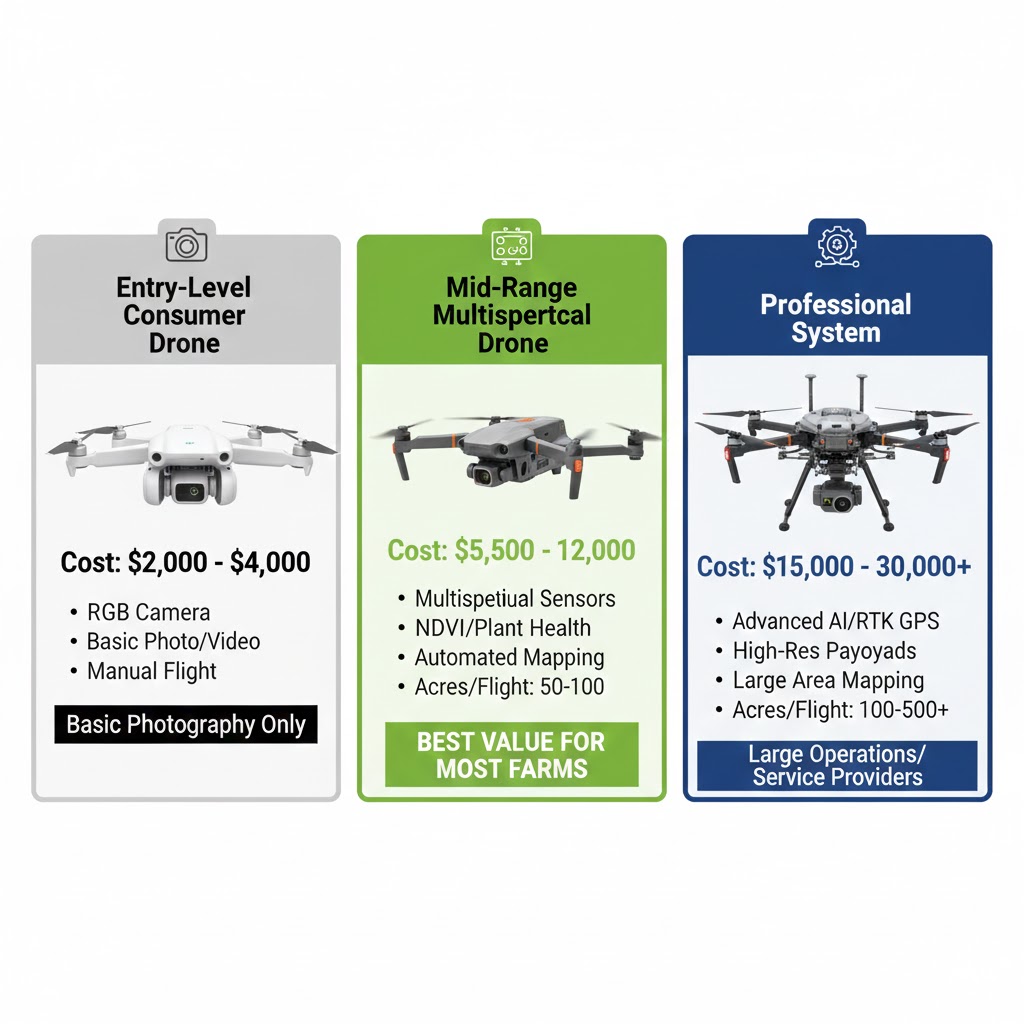
- Entry-Level RGB Photography Drones — $1,500-3,000 systems for basic field documentation, visual scouting, and farm marketing photos without advanced crop health analysis
- Multispectral Crop Monitoring Drones — $5,000-12,000 platforms with NDVI capability for nitrogen management, stress detection, and variable rate prescription creation for grain and row crops
- Thermal Imaging Agricultural Drones — $8,000-15,000 systems with thermal cameras for irrigation management, livestock monitoring, and identifying water stress invisible to standard cameras
- Professional Ag Service Provider Setups — $15,000-30,000 advanced platforms with RTK GPS, multiple sensor options, extended flight time for custom drone services across multiple farms
- Sprayer Drones for Spot Treatment — $15,000-25,000 UAVs capable of carrying and applying crop protection products to specific problem areas identified through imaging flights
- Specialty Crop Monitoring Systems — Customized platforms optimized for orchard, vineyard, or high-value vegetable operations with specialized sensors and flight patterns
Each agricultural operation requires different considerations when deciding to Invest in Farm Drones in 2026 based on crops, scale, and management priorities.
FAQs About Investing in Farm Drones in 2026
What is the best farm drone to buy in 2026 for most farmers?
The DJI Mavic 3 Multispectral ($5,500-6,500) offers the best balance of capability, reliability, and cost for typical grain and row crop operations from 200-1,000 acres. It provides genuine multispectral imaging for NDVI analysis, excellent flight time (43 minutes), and proven agricultural performance without the complexity of more expensive systems.
Should I invest in farm drones or hire a drone service provider?
Hire services if you farm under 300 acres or will use drones sporadically (monthly or less). Consider ownership if you farm 300+ acres, want weekly flights during critical periods, or have multiple applications (crops + livestock monitoring). Service costs run $8-15/acre while ownership breaks even around 400-600 acres flown annually depending on system costs.
How much does it really cost to invest in farm drones in 2026?
Realistic total costs including drone, sensors, batteries, software, insurance, and training range from $8,000-12,000 first year for mid-range systems, then $1,500-2,500 annually for ongoing software, insurance, and battery replacement. Budget an additional $500-1,000 for unexpected repairs. Cheaper consumer drones ($2,000-3,000 total) work for basic photography but lack crop analysis capabilities.
What ROI can I expect if I invest in farm drones in 2026?
Conservative ROI estimates show $15-40/acre annual benefit from combined input reduction, early problem detection, and improved irrigation management. On 500 acres, that’s $7,500-20,000 annual value. Most operations see 1-3 year payback periods. However, ROI depends entirely on converting data into actual management changes — drones that fly but don’t influence decisions have zero ROI.
Do I need a pilot’s license to fly agricultural drones?
Not a traditional pilot’s license, but commercial agricultural use requires FAA Part 107 certification. This involves passing a 60-question knowledge test ($175) covering airspace, weather, regulations, and safety. Study materials cost $50-200. The test is significantly easier than private pilot certification. Flying without Part 107 for commercial/agricultural purposes risks $1,000+ fines per violation.
Can farm drones really save money on fertilizer and chemicals?
Yes, with proper implementation. University studies consistently show 15-30% reduction in nitrogen fertilizer through precision management guided by drone NDVI mapping. Spot treatment of weeds or pests versus blanket application can reduce herbicide/insecticide use by 20-40%. However, these savings require variable rate equipment, proper data interpretation, and willingness to manage fields as zones rather than uniform units.
Summary
Here’s the truth: The decision to Invest in Farm Drones in 2026 isn’t right for every farm, but for mid-to-large operations committed to precision agriculture, it’s increasingly difficult to compete without aerial crop intelligence. Now that you understand the real costs ($8,000-12,000 to start, $1,500-2,500 annual), realistic ROI ($15-40/acre in savings), and actual use cases that deliver value, you can make an informed decision based on your specific operation.
Start this week with one concrete step: Calculate your potential savings from nitrogen reduction or targeted pest management on your specific acreage. If the numbers show 2-year or better payback, investigate which drone platform matches your needs. If ROI looks marginal, explore custom drone services as a lower-risk entry point.
Thousands of farmers are successfully using drone technology to reduce costs, improve yields, and make better-informed decisions. The difference between those seeing value and those with expensive garage decorations is clarity of purpose before purchase and commitment to regular use after.
Related Resources
Essential farm drone resources:
- NDVI Interpretation Guide — Learn to read vegetation index maps and make decisions
- FAA Part 107 Info → faa.gov/uas/commercial_operators
- Purdue Precision Ag Research → land-grant university .edu source
- NDVI Explanation → NASA or agricultural university resource